
Denise Gallagher on “How to Calm a Rain Bull”
Author and Illustrator Denise Gallagher joins us to talk all about folklore, magic in the everyday, kidlit and her upcoming book, “How to Calm a Rain Bull.” The collection features 24 different seasonal and nature tales from all around the world.
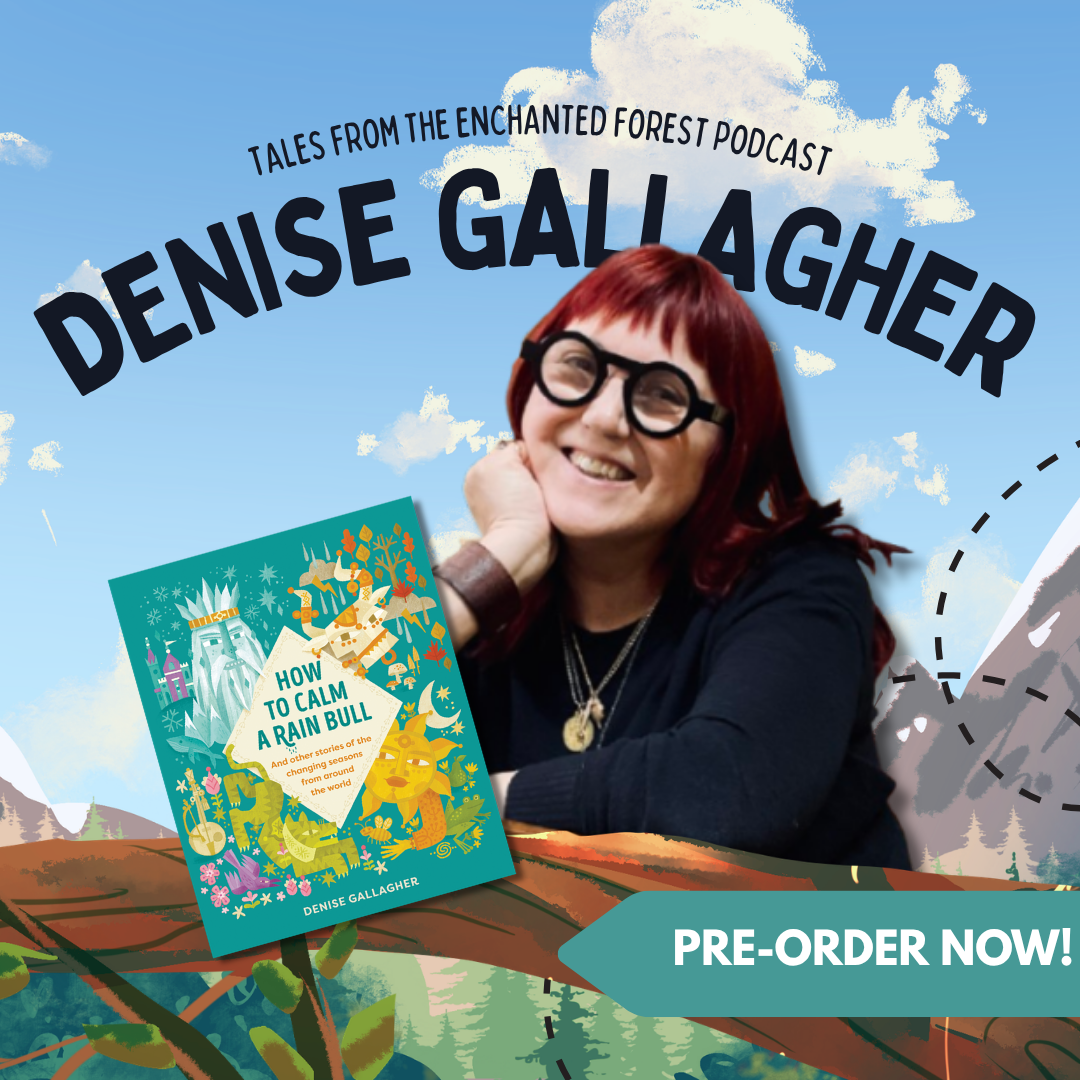
Welcome back, dear Travellers! Today we have the absolute pleasure of sharing our interview with author and illustrator, Denise Gallagher. We received an advanced reader copy of her upcoming book, “How to Calm a Rain Bull” and we loved it so much that we just had to reach out and pick her brain on everything folklore!
Her new story collection, “How to Calm a Rain Bull,” comes out September 22nd 2026 and covers 24 stunningly illustrated folktales, myths and legends about the seasons and other natural phenomena!
You can pre-order now on any of these non-affiliate links:
You can follow Denise’s journey on her website, Substack or on social media sites like Instagram.
Please note that this is an edited transcript of the full audio interview and dialogue has been condensed/edited in areas for clarity. For the full interview, please listen to it on any of your favourite podcast players!
Sparrow: Now, you’ve worked across illustration, writing and musical theater. Where do your ideas usually come from when you begin tackling a new project?
Denise: I think that artists, musicians and writers have sort of their own filter that they look at the world and where they see the world and things that other people might not notice. I always keep my eyes out for little bits of magic or little interesting things that I may see from anywhere. It could be a sad song or a lost button or an interesting insect. These things that through my lens, through me looking at the world, I might start to wonder, what is the story behind that? And even this week, I read a news story about a French king who demanded strawberries in the middle of winter. And this actually happened.
It’s just those kinds of things that jump out at me because that’s how I view the world. But I think inspiration is everywhere. So that’s how when I walk through, I just collect those little bits of stories. And the fun part is when I start putting them together and using them to tell a story.
Sparrow: Well, growing up in the States, especially in New Orleans, Louisiana, were there any folk tales or legends from your childhood that have been like a unique source of inspiration on your journey as a children’s book author?
Denise: Oh, yes. Louisiana probably has the richest culture of all of the United States. It’s a very old community and influenced by French and Spanish, Haitian and Canada with Cajuns and Creoles. So there are tales that are full of magic, like Voodoo Queens and Foufoule, which are little swamp fires that lead you through the swamp. And the Luguru, which is like a Cajun werewolf. These are the stories that surrounded me as I was growing up as a child.
So, I really kind of grew up with some rich folk telling folklore that inspired me.
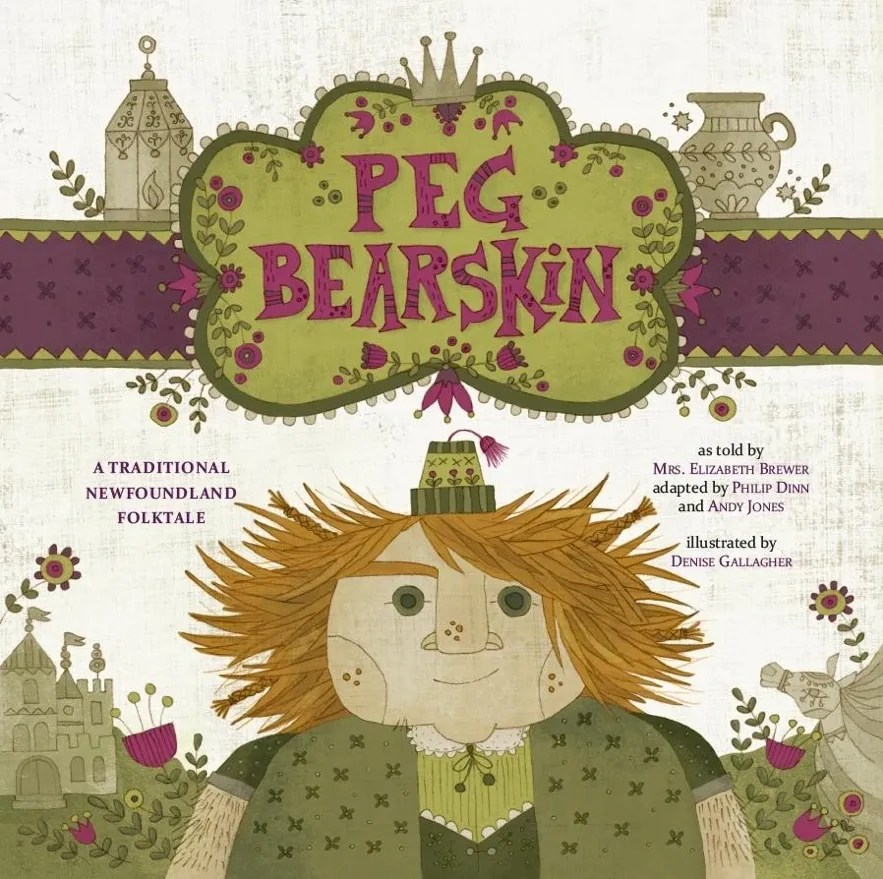
Fox: So, your journey with folklore has been quite a few projects and mediums from illustrating Peg Bearskin in 2019 to illustrating Iroquois folktales for Faces magazine and then to writing your own folktale with Moonsong. And now we have How to Calm a Rain Bull.
How has your relationship with folklore evolved over the years and through all these different projects that you’ve done?
Denise: Well, let’s see- some of my favorite picture books as a child were the ones that are a little more dark and spooky or that had that sort of magical element to it. The Twelve Dancing Princesses was my favorite. But there’s also a wonderfully illustrated version of The Sorcerer’s Apprentice by Tomi Unger that had illustrations that led you through the book and through the corners, there were salamanders and frogs and jars and eyeballs floating. So these were like the things that I loved as a child. And then as I grew, I gravitated to stories that had magic and things like that.
And I still love to read middle grade fiction because those are the stories that I love. And so I started writing what I love to read and started working on things because the things that I gravitated towards were things that had sort of a twisting story where everything kind of ties up at the end or there’s some magic or there’s some deep meaning through.
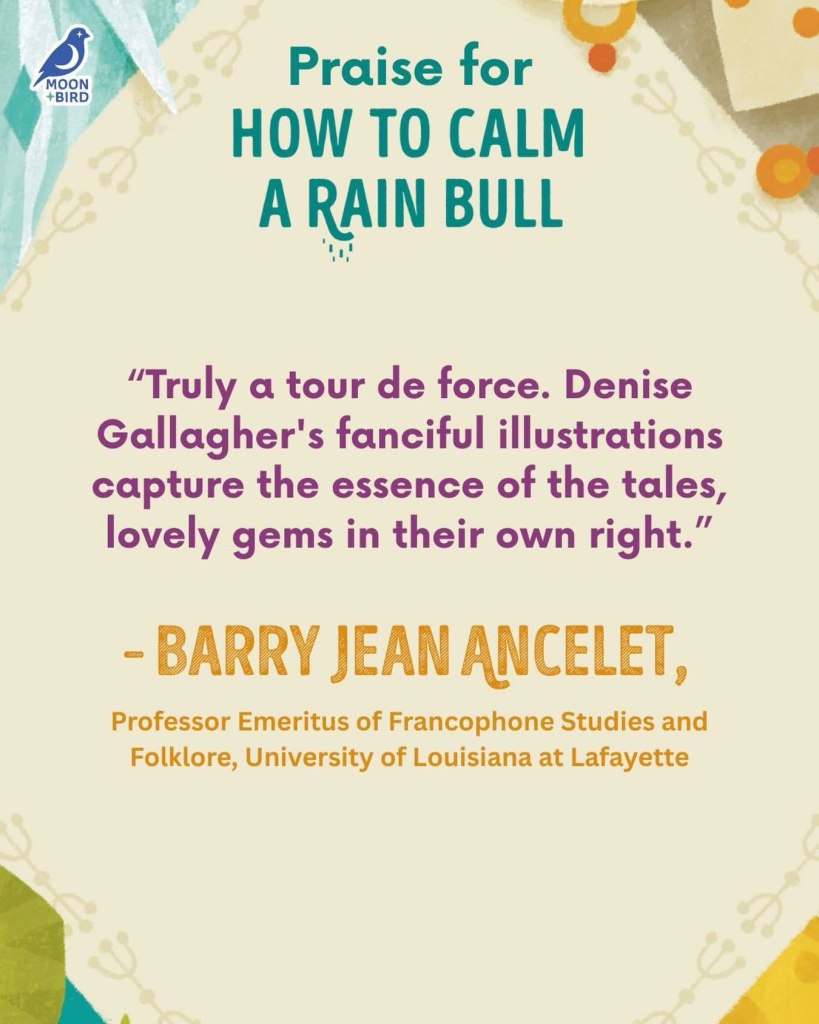
So, I started working with a local folklorist illustrating his tales. Barry Ancelet is a Cajun folklorist and I did some illustration with him. And because of that, I then did a Canadian folktale, which was Peg Bearskin. I did the illustration for that and then started getting more jobs doing illustration for folktales. And I guess because I put that out there into the world that this is what I love to do and it’s what I’m good at, it came back to me.
Then “How to Calm a Rain Bull” was the latest and most extensive project. And wow, I mean, it just brought things to me that I never thought possible and I started to really love folklore even more.
Fox: I love hearing that you grew up surrounded by this culture and it was something that you love to read. And now you’re part of some other child’s magical experience, which is fantastic because you’re also part of that folklore that now they’re enjoying and then inspiring them to then maybe write their own. And I think that’s really how folklore is transmitted- It’s from person to person.
Denise: And, you know, folklore is an oral folk telling. It is a way of telling stories and handing them down from generation to generation. So I feel like when bearing these stories that I’m part of that handing down. Like you said I hope kids are inspired to research even more and write their own because that’s what I did.
It’s a great way to share what we know about the world in a way that makes it interesting or makes people want to learn more about things such as the seasons and even more! There is folklore about all kinds of things that kids can learn about. So, I’m just happy to be able to use my talents to share that with kids and people around the world.
Fox: Were there any rabbit holes that you just found yourself caught in? Because I feel like that’s the thing that gets you when you start researching. I start going through the rabbit holes and I’m just stuck with the story in the research process for weeks and weeks.
Denise: Yes, I had 24 stories that I was trying to narrow it down to. So I actually collected 81 stories and narrowed it down to 24.
But there were some that I would find sort of a modern version and then I’d say, well, where does this come from? So I’d go down those rabbit holes and find the earliest version.
And some of them were ancient- like the Hittite story from Syria is one of the oldest stories ever told. It was fascinating to see the different versions of the stories even from the same culture, but just written in a different way, depending on who was doing the writing and who was telling. Some were written more as scientific or like research so it wasn’t really creative, but they were told directly from the people who were telling them. So people were recording the stories, writing them down as the storytellers were telling them. I really tried to find the most original. So, yeah, I would go down several rabbit holes.
Sparrow: So as you mentioned, there’s 24 stories in the book, but you found 81. Was there any particular story that stood out to you, you loved, but ultimately left out of the book?
Denise: Yes, actually, there’s one that doesn’t have to do with the seasons as much, but I just loved it. It was a story about the gods that were worried because there was a man who was very bad at hunting, but he was really good at fishing. And so he was taking all the fish. The gods were afraid that he’s going to take all the fish. So they needed to make a companion for him.
So they created a dog and they formed the dog out of fish. And where they held the dog while they were creating it was his nose. So, the nose remains cold because it’s a cold piece of fish.
And now men, when they go hunting, they take their dogs and all dogs have cold noses because they were made of fish. It was one of my favorite stories and I want to use it somehow.
But it was a tale from the West Indies- where it came from originally. And, to me, it’s just so funny because, well, I mean, I love dogs. I love animals. So now when I look at my dog, we’re like, your nose is a little piece of fish. But it’s just fascinating to me that this is one of those “why” tales.
“Why a dog’s nose is cold” and it’s because he was created to be a companion for hunters and he was made out of fish.
Fox: Were there any other tales that did surprise you or that made you kind of see the world around you and maybe a different perspective? Or did you think, wow, I’ve never thought of that that way, but it makes sense.
Denise: Well, absolutely. Because being from North America, I see the seasons as spring, summer, winter, fall or autumn. But as I was doing research, it became clear that there are many, many cultures where there are no seasons. There are some that had the monsoon season or the dry season and the wet season. Where others it was hurricane season or so and it became clear to me pretty quickly because we wanted to include stories from each continent.
So it became clear to me that I had to sort of look at the world through a broader lens and say, “oh, in this culture there were only two seasons or there were seasons that meant hurricane season or monsoon season.” And those were legitimately seasons.
So the book explains, and I have kind of an introduction to the book, and it explains how those who are reading the book might say”
“oh- I look at seasons a certain way, but there are cultures around the world who have completely different versions of what a season is or what a season entails.”
That was really interesting- learning about all the different ways that a season could be interpreted.
I’m from Louisiana, which, you know, we have a very, very short spring and fall and we relish those days because summer is intensely hot and humid and winter is wet and cold. So those spring days are celebrated and cherished because there are not many of them.
And we also have a hurricane season. So I guess it should have been clear to me, but once I started thinking about that, I was like, “oh, yeah.” And Puerto Rico also has hurricane season. So when I learned about Huracan, which is a Puerto Rican god who causes hurricanes, it kind of rang true to me as well because I’ve been through some hurricanes.
Sparrow: See, I just need a seasonal tale to explain flu season and construction season and then I’ll be good.
Fox: So one question I did have is when you have lots of versions of the same story, but from different countries, how did you kind of settle on which version to tell in your collection?
Denise: Well, when I was collecting the stories, I worked closely with my editor because we wanted to have a good mix of stories. We wanted to have some that dealt with animals, some with princes and princesses, others with gods and goddesses. But we didn’t want to have too many of the same.
We wanted to have a good sort of range. Also if, you know, some contain animals, we didn’t want to have too many. Like there were a couple of turtle stories, so I had to pick one turtle story that was my favorite.
There was specifically the little bird and the fir tree, the kind-hearted fir tree. That story, the one that I have in the book, is from Romania, but there was also a version of that story from the native cultures in North America. But, I already had a few stories from North America, so I chose the one from Romania because it was a unique culture.
So it really was kind of like building with Jenga blocks because I’d move a story here and then I’d have to add a story. Some cultures had more stories or more elaborate stories and in other cultures, there weren’t as many to choose from.
It really was a game of choosing stories that represented cultures from around the world that were unique and told stories about the seasons. But also some about animals, some, you know, with princes and princesses, some with gods and goddesses, but not too many of the same kind of stories.
So it was fun and that’s why I actually had 81 options because it was trying to choose the ones that really represented the entire world and was an intriguing collection as a whole. It was definitely a balancing act….
You know, the research itself was- I learned so much about the world and I wasn’t the greatest student of world geography and that kind of stuff or learning about cultures. But this, and that’s why I’m hoping that teachers may use this book to help students learn, get them interested in learning about other cultures because during my research, I learned so much about so many different cultures and cultures that I had never heard about.
So maybe using folklore, I think, is a great way to teach students or to learn about the cultures from around the world.
Fox: That is actually something I noticed right away with each individual story is that the little details about the animals, the plants, the certain things they were wearing, the background details, I felt like all of that made me feel like I was now in this new country or this new place and each story did that and it did it so seamlessly.
How did that feel for you as the researcher to try and incorporate the traditional dress, the native animals, the plants, all of those into each illustration and then also to keep in mind to weave them into the story?
Denise: Those were other rabbit holes that I went down because I have notes and notes and sketches, sketchbooks full of things- patterns in Korea or animals in Peru. And not everything made it into the story but I wanted to immerse myself and get the details right. These are tales that are meaningful to each culture that I wrote them for and so I wanted to make sure that I got the details correct and so I made sure to do my research and really study the culture and that’s what I found.
I found that I learned so much about the Yagin people in Tierra del Fuego. Fascinating, so for the people who lived there it’s like the harshest environment on the earth. It’s in the very southernmost tip of South America and harsh, wet, cold and yet the people wore very little clothes.
They smeared their bodies with fish oil to swim in the sea to catch their food and this was a culture that I had never heard about and a place I’d never heard about. So just learning and learning about the structures that they lived in, learning about the food that they cooked, the animals that existed around them and the mountains around them and the way the shore, what they caught to eat, it just, to me, I couldn’t get enough.
I just, I wanted to learn and that’s what doing this research ended up being a gift to me too, so that I could learn about the world and the people in it and so I’m so glad that you noticed those details because I really wanted to intrigue people who are seeing, reading, even if you just read one story and say, well, I want to learn more about that culture or I’m really fascinated about this story of the cherry blossom tree, so I want to go and look and read more about that culture.
So yeah, that means a lot to me that you know the details made it feel more real to you or made you want to just, you know, like be immersed in that culture for that story.
Fox: So coming towards the end of the book, we do have our glossary and we also have our sources page…So for some of the stories that you had, there were abundant historical sources while others like the Candle Dragon or the Legend of the Oak King and the Holly King, they have very little surviving material.
Did you find it more challenging when there was more material to work from?
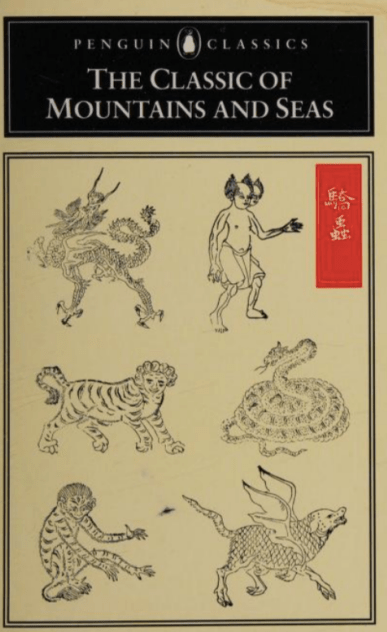
Denise: That’s a great question because you’re right. There were some tales that there was an abundance and it was a little easier to put the tales together. And yet there were some like the Candle Dragon, where there were maybe three lines in an ancient text about this dragon who, when he breathes out it’s summer, when he breathes in it’s winter, and he holds a candle to lead people into the afterlife.
And that was it. So, when I first started writing the stories, I came up with a way of telling the stories where I had a main character who had a personality…dialogue, and to make the stories a little more accessible and interesting for people or for children to read.
And so having that structure helped me to then take the tales that had very little information and then use my research about the flora and fauna and how the people in those stories- how they live their lives.
So I actually ended up enjoying writing those stories a lot because the Candle Dragon ended up being one of my favorite stories in the book. And it was because I had to sort of dig a little bit into my creative writing and create this main character who is sort of a story within a story and, and tell the story of how he lived in that culture and then how he met the Candle Dragon and then how he approached the Candle Dragons breathing in and breathing out and creating the seasons.
Sparrow: In your opinion, what about these tales resonates with us so deeply that we retell them over and over again?
Denise: Well, folklore is as you know, as humans, we long for explanations, like…there are scientific reasons for why the seasons change and we know all of these things, but we also crave a little bit of that original magic. And, folklore was an oral telling that was passed down from generation to generation from ancient generations. And it’s also this sort of sense of pride or sense of curiosity about the world and also the way the stories were used to make sure that future generations paid attention or learned or did things a certain way.
So, the passing down of these folk tales is really also giving future generations a clue or a hint at what it used to be like so they don’t forget where they come from or how the culture used to deal with things. So, I think like I said before, it’s a great way for people to learn about the world and the different cultures that existed before we exist now. And to me, it was especially interesting to learn.
It was a great way to learn about different cultures that were different from my own. So, it’s comforting to see. We crave a little bit of that original magic and it’s comforting to see a fir tree and why we celebrate the fir tree is because it saved the birds that were unable to fly away for the winter…
So…it’s just kind of a nice way or a comforting way to look at the world and see that maybe some of this magic still exists. And if we look, we might see what’s magical about the world and still see the world as a magical place, even when things are a little tough or something like that- we can still see how our ancestors or how the people before us really noticed the magic about the world and really cherished it. So, we can still do that.
We can still look and cherish the magic around us.
We cannot thank Denise enough for giving us her time and wisdom. To hear so much more, including the full answers to each question and which story from “How to Calm a Rain Bull” Denise would adapt into a stage musical, listen to the episode or check out the full unedited transcripts on your podcast player of choice!
Thank you once again to Netgalley and the publisher for an Advanced Copy of the book. All links are non-affiliate and all images belong to their copyright owners.

 Tales from the Enchanted Forest