
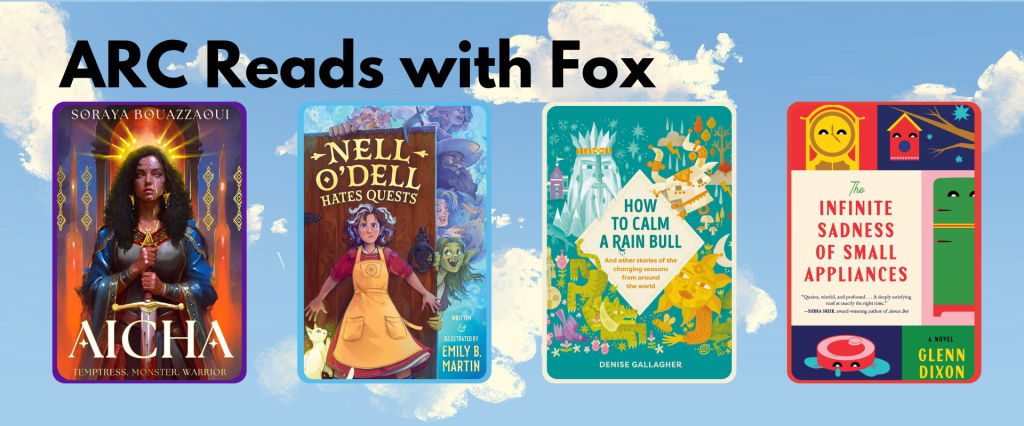
Happy World Book Day! We love finding new books and media, especially when they have to do with fairytales, myths, legends and even just story-telling in general. Lucky for us, we’ve been absolutely spoiled for choice in 2026 with so many new releases in these genres (please ignore our TBR, we’re getting to it). To celebrate, here are some of our recent Netgalley reads! You can also listen to the episode where we discuss them here.
- Aicha by Soraya Bouazzaoui (audiobook narrated by Sarah Slimani | Orbit)
- Nell O’Dell Hates Quests by Emily B. Martin (Candlewick Press)
- How to Calm a Rain Bull by Denise Gallagher (publishing September 2026 | Moon + Bird)
- The Infinite Sadness of Small Appliances by Glenn Dixon (Atria Books)
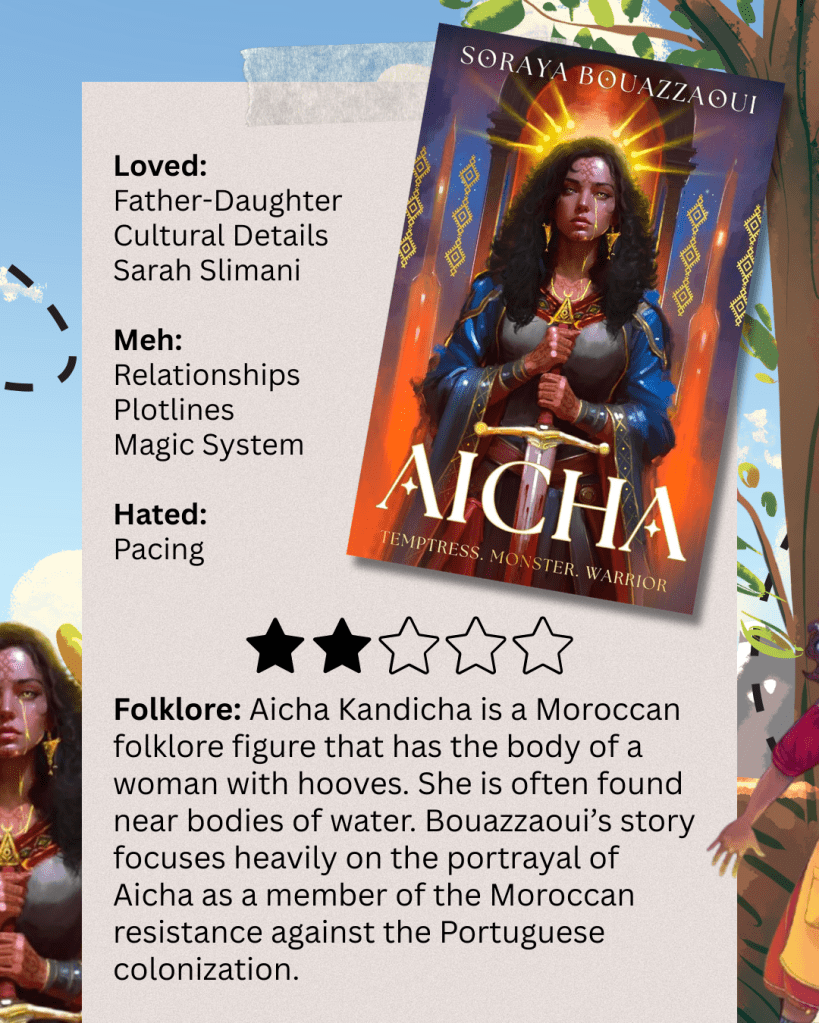
Aicha by Soraya Bouazzaoui
Aicha tells the story of a young woman trying to find her place in the resistance against the Portuguese colonizers as her community prepares to make their final stand. Set in a fantasy world, the story is loosely based on the Moroccan folklore of Aicha Kandicha and the historical siege of Mazagan. We actually covered a version of Aicha’s story, which can be found here: Aicha: The Demon Slayer.
We received an audiobook version of this story and wow, Sarah Slimani brought the world to life. Her narration style sucked you in and added so much depth. Truly, where Bouazzaoui’s writing excelled was the world building. The historical details made this book shine, however, the pacing and lack of depth really held it back. I wish I had enjoyed it more, but too many times I found myself asking when the story would truly begin.
What I loved (No Spoilers)
I loved Aicha’s relationship with her family, especially her father. He was hard on the girls, but he loved them and would do anything for them. I feel like in folklore and fairytales specifically, we end up with so many deadbeat/ head-in-the-sand or straight up abusive father figures that it was refreshing to see a strong man of colour portrayed as loving. I could see my own Baba on these pages and I am grateful for the much-needed representation.
What Was Okay (No Spoilers)
The story spent so much time building up the world, that it was disappointing that the relationships and magic system were not given the same amount of time. Unfortunately, I found the Djinn to be underdeveloped and while there was so much promise there, it never felt like it amounted to anything until the last two chapters.
One downfall to having a story set in a childhood location with pre-existing relationships is that flashbacks play a pivotal role. We are told about how Rachid and Aicha fell in love, we are told the history of her friendships and yet, we don’t get any depth.
Also, the build up to the main event was too long in my opinion. Bouazzaoui’s writing in the last couple chapters was stellar and I wish that those scenes had happened earlier in the story and set Aicha up for a spectacular feminine rage arc. Instead, it was how the story ended.
What Did Not Work (No Spoilers)
The pacing of this book was unbearable. The chapters all allude to a siege by the Sultan and the characters are working towards the moment they can take down the colonizers, and yet for a woman who has a voice yelling at her to kill, Aicha does remarkably little. The promise of revenge and bloodshed kept me going, but honestly I was tempted to DNF 70%. If this had been the first book in an epic fantasy series than I could see the long buildup to establish a greater world and system- but, it just didn’t work here.
Folklore and History behind the Fiction
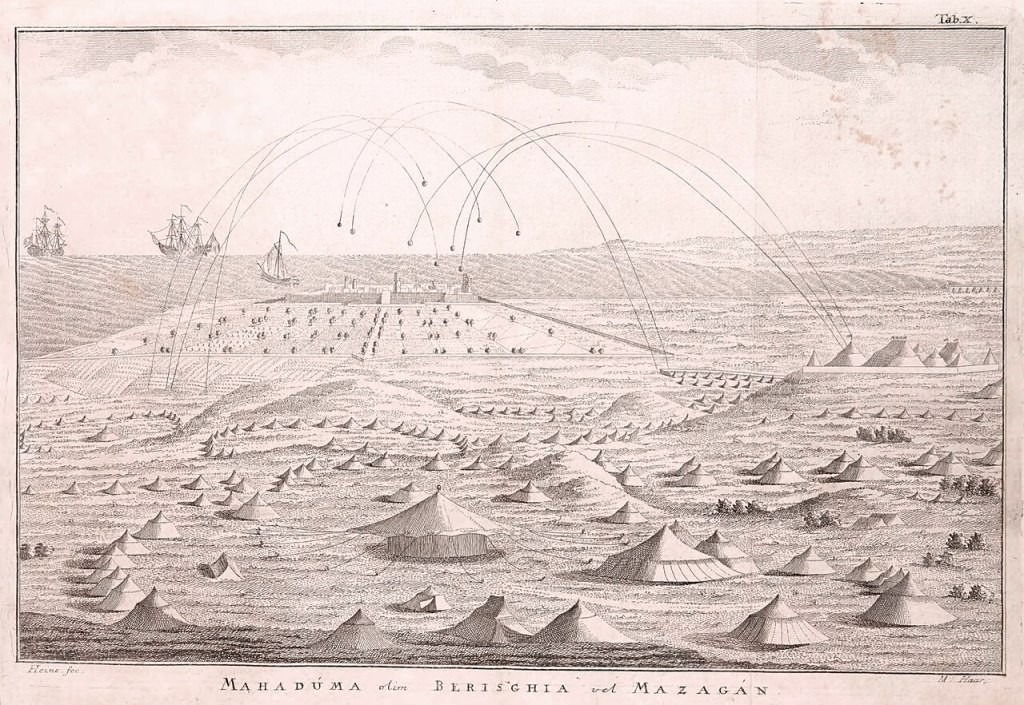
The setting of the story is based on the Siege of Mazagan (later El-Jadida) in 1769. It was the last port held by the Portuguese under the banner of King Joseph I of Portugal before the Siege of the Sultan which serves as the buildup in the book.
Aicha can refer to the folklore character “Aicha Kandicha” a Djinn who looks like a beautiful woman (or woman possessed by a Djinn) with hooved feet that tempts men to their death. The folklore of her being a “temptress” could come from references to a Moroccan countess in El-Jadida who fought the Porteguese by seducing them and then murdering them following the death of her husband. However, these are contested accounts.
Engraving of the Siege by Peter Haas for Efterretninger om Marokos og Fes by Georg Hjersing Høst, Public domain, via Wikimedia Commons
Nell O’Dell Hates Quests by Emily B. Martin
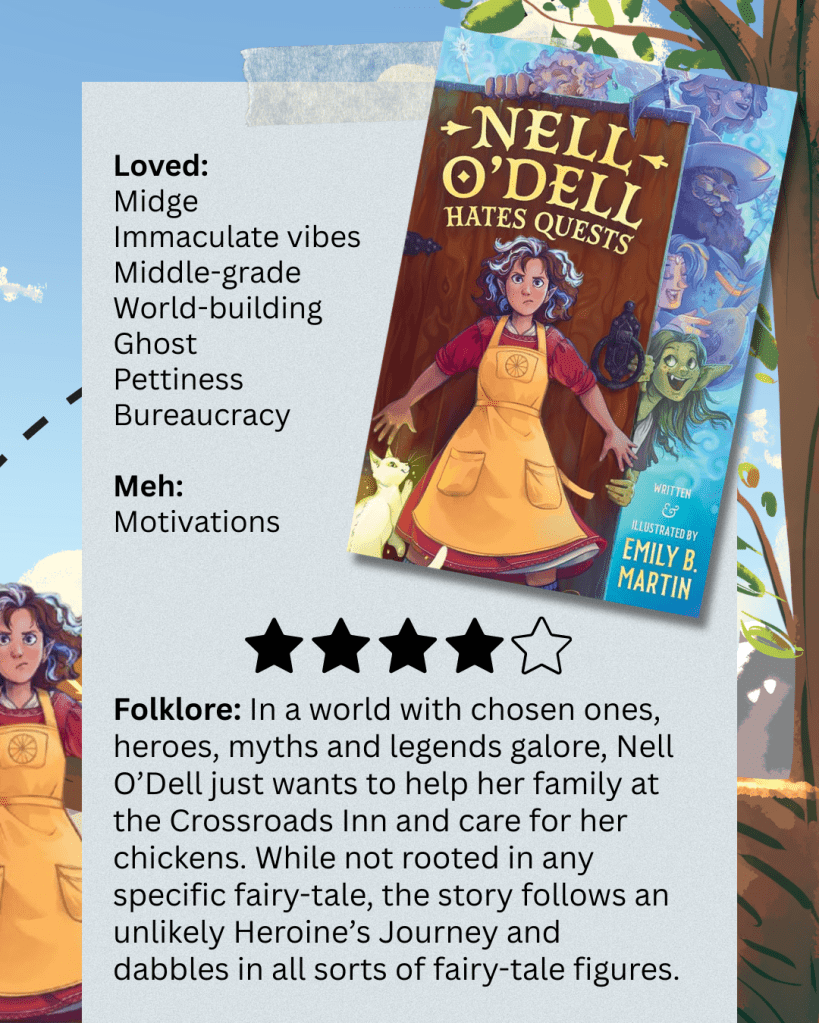
Nell O’Dell Hates Quest is a charming middle-grade book that follows Nell, a young girl who just wants to care for her chickens and tend to her garden.
Having grown up as the child of two great adventurers and surrounded by chosen ones, magical creatures, and enough Quests-to-Save-the-World, the absolute LAST thing she wants is to go on a quest herself. Unfortunately, taxes and paperwork send her on a business trip that ends up being much more than she wanted.
The story as a whole was great, except for some plot points relating to motivations that did not quite make sense. It fits in well with the current trend of middle-grade books on unlikely and reluctant heroes taking centre stage.
What I Loved (No Spoilers)
I loved so much about this book. It was age appropriate (although older readers would enjoy it too!) while challenging the reader to expand their perception of the hero’s journey. The cast of characters also worked wonderfully together and I loved Midge so much by the end.
What was Meh (Spoiler)
I can kinda see why in child-teen logic, it might make sense to have the Inn shut down as a way to protect the dragons…but unfortunately it just didn’t click. The Questors were already on their way and the timeline crunch was too soon to expect the deed going missing / being destroyed to really amount to much.
Fairy-tale Tropes
So how does Nell O’Dell fit within the fairy tale sphere? Well, the main thing is that this book tackles all the tropes! The Chosen One? Yeah, not so special here. Mystical Hermits who gift you magical artifacts? Well, they’re probably unionized in this world.
And my absolute favourite- the Crossroads Inn. Every quest begins at a crossroads and here, Questers can hear their fortunes, train, find a bard or two to sing of their travels, and otherwise stock up before their adventures.
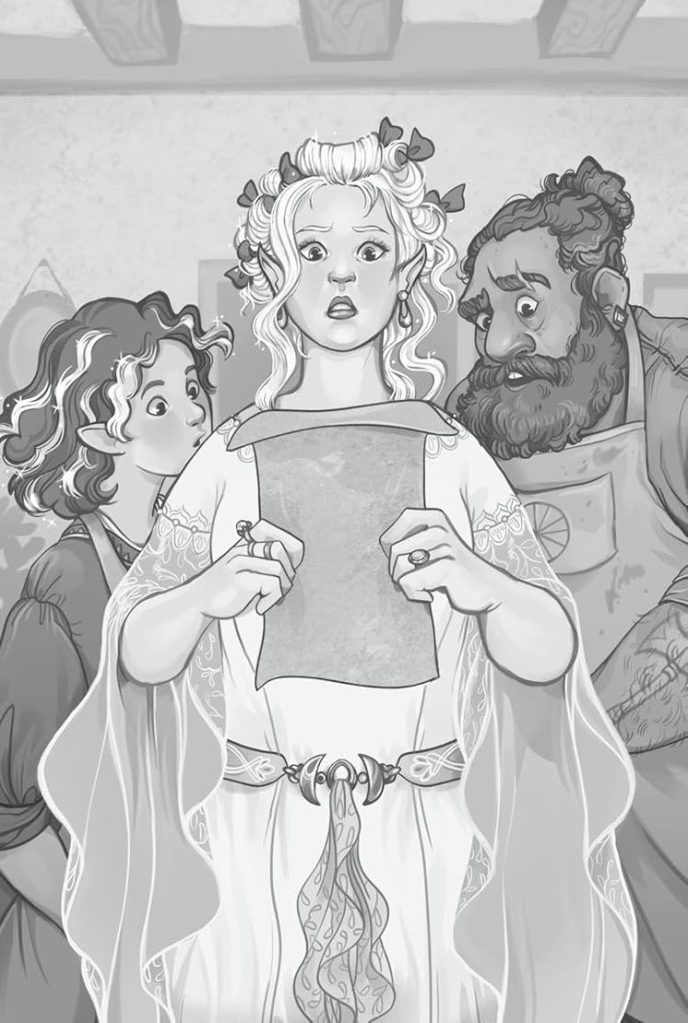
I loved that the “behind-the-scenes” of adventuring was the highlight for a lot of this book and I hope Emily B. Martin returns to this world again, especially since her illustrations were stunning and I want to see more!
How to Calm a Rain Bull by Denise Gallagher
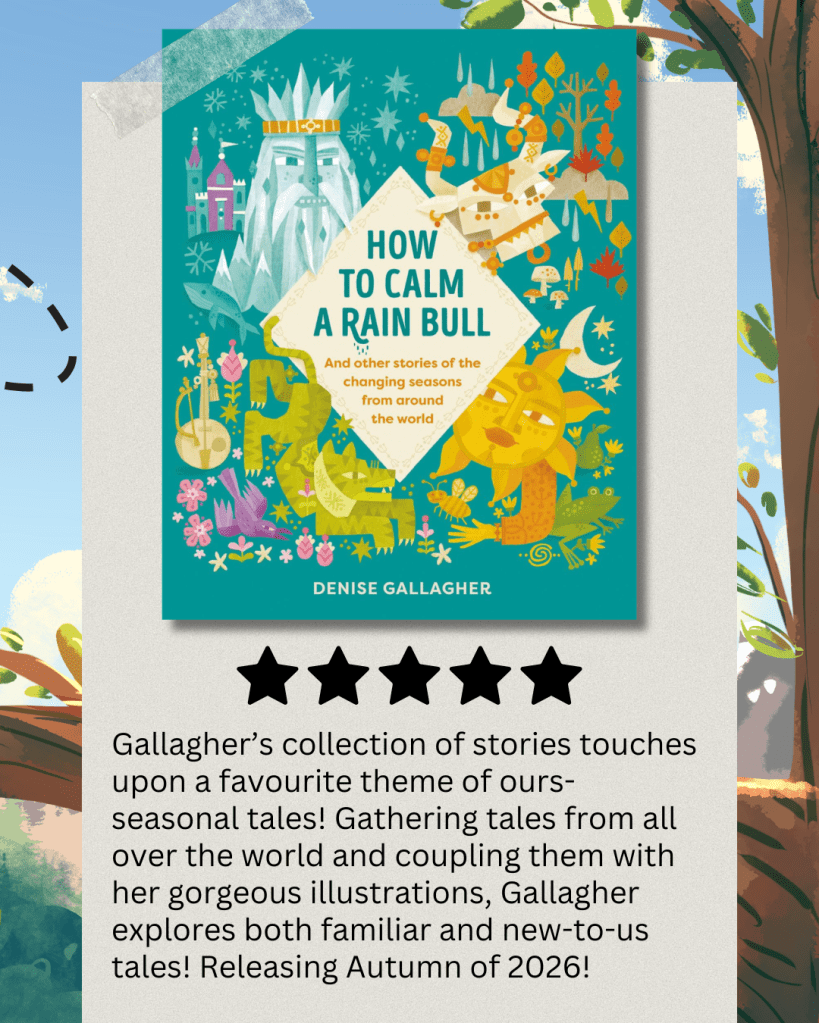
Seasonal myths are my absolute favourite type of explanatory myth, and if you listen to the podcast then you will know that we tell a LOT of seasonal myths! So, we were super excited to get a copy of “How to Calm a Rain Bull” publishing September 2026.
Her gorgeous illustrations are the right level of whimsical to add to the storytelling without making it too young or too old for certain readers. Honestly, they accompany the stories so beautifully that I could take an art book just focused on them!
I also appreciate that Gallagher included a key terms section in the back, but I did wish some of the source listings were more specific.
Overall, however, a great addition to any folklore and fairy tale lovers collection! Some tales that we’ve also covered include:
- The Girl, the Witch and the Return of Spring (Bulgaria)
- The Holly King and the Oak King (Celtic)
- The Sky Bridge of Birds (Korea)
The Infinite Sadness of Small Appliances by Glenn Dixon
If you listened to our latest episode where we cover these books, then you will know that we talked about Artemis, the Greek Goddess, as well as Artemis, the space mission.
Something about the humanity of the Artemis II Space Mission resonated so deeply with us and Glenn Dixon’s “The Infinite Sadness of Small Appliances” helped us understand why.
Following a Roomba named Scout, Dixon’s book explores a dystopian world where everything and everyone is connected to the Grid. The appliances that make up your household have tasks and objectives, but Scout starts to wonder what it truly means to exist.
Dixon’s work made us think about how the stories we tell are a part of our human experience. My favourite quote from the book all but speaks for itself.
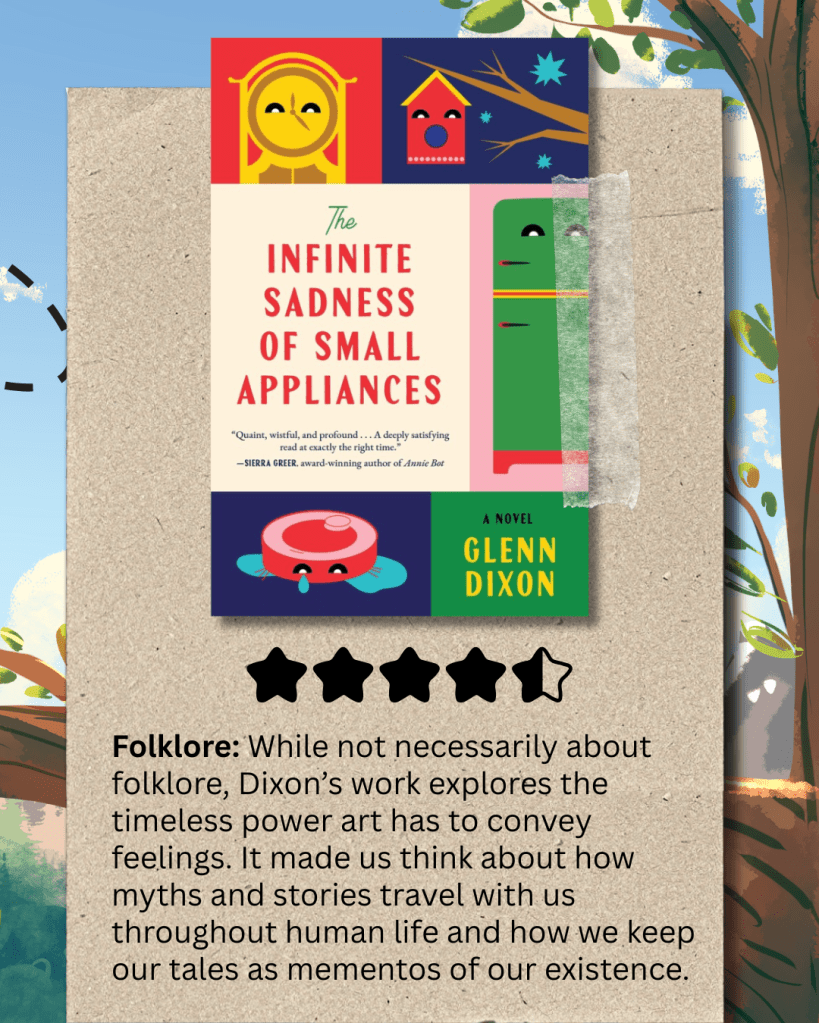
Scout says, “It’s that three hundred years ago-” she threw a glance at clock to make sure he wouldn’t interrupt- “he created a thing, a feeling in his music, and if it is well played, even centuries later, this thing comes into being again.”
“Beauty?” said Fridge.
“Yes, if we wish to call it that, but that’s not the point either. It’s that this thing still touches a Human in the same way, across all those years. It touches the soul.”
I think that after all these years, we are still touched by folklore, fairytales, myths and legends because they still touch our soul. It’s why we can send a spacecraft into space and call it Orion and name missions after Greek Gods and hope they make it.
Thank you to Netgalley and the publishers for advanced copies of the books. All reviews and opinions are our own. All rights to images and quotes belong to their copyright owners. Thank you to Orbit (Aicha), Candlewick Press (Nell O’Dell Hates Quests), Moon+Bird (How to Calm a Rain Bull) and Atria Books (The Infinite Sadness of Small Appliances).



 Tales from the Enchanted Forest
#/media/File:Mahad%C3%BAma_Berisghia_Mazag%C3%A1n.jpg)