
Greetings Travellers! Welcome back to Tales from the Enchanted Forest with your animal companions Fox and Sparrow! This blog post is dedicated to our last episode of 2022, the Legend of the Holly King and the Oak King.
We have taken all the various retellings of this story and created a yuletide patchwork story to share with you this winter season!
When I started researching for this episode, I instantly found references to this epic, eternal battle between the two kings but no actual story to tell aside from one King defeating the other on the solstice and giving rise to Spring and Summer or Fall and Winter. However, there are many references to this story as a Celtic Druidic legend, a Wiccan story and later on, famous Medieval motifs. In our search, we also came across some interesting modern takes on this story, such as one by Erica Baron connecting the tale to Climate Change and another by Carole Plaine.
Is it true?
This is a story laden with controversy because no one knows what is true and what is an invention. It is without a doubt that the motifs of the two were significant and there may have been a legend at some point, but we only have the fragments of a story. Brothers show up time and time again as two opposites in folklore and legends so it is likely that there were two brothers involved but not to what capacity.
Despite this, the story’s premise is fascinating and we wanted to bring you a well-researched version of it. Stories are meant to be told after all!
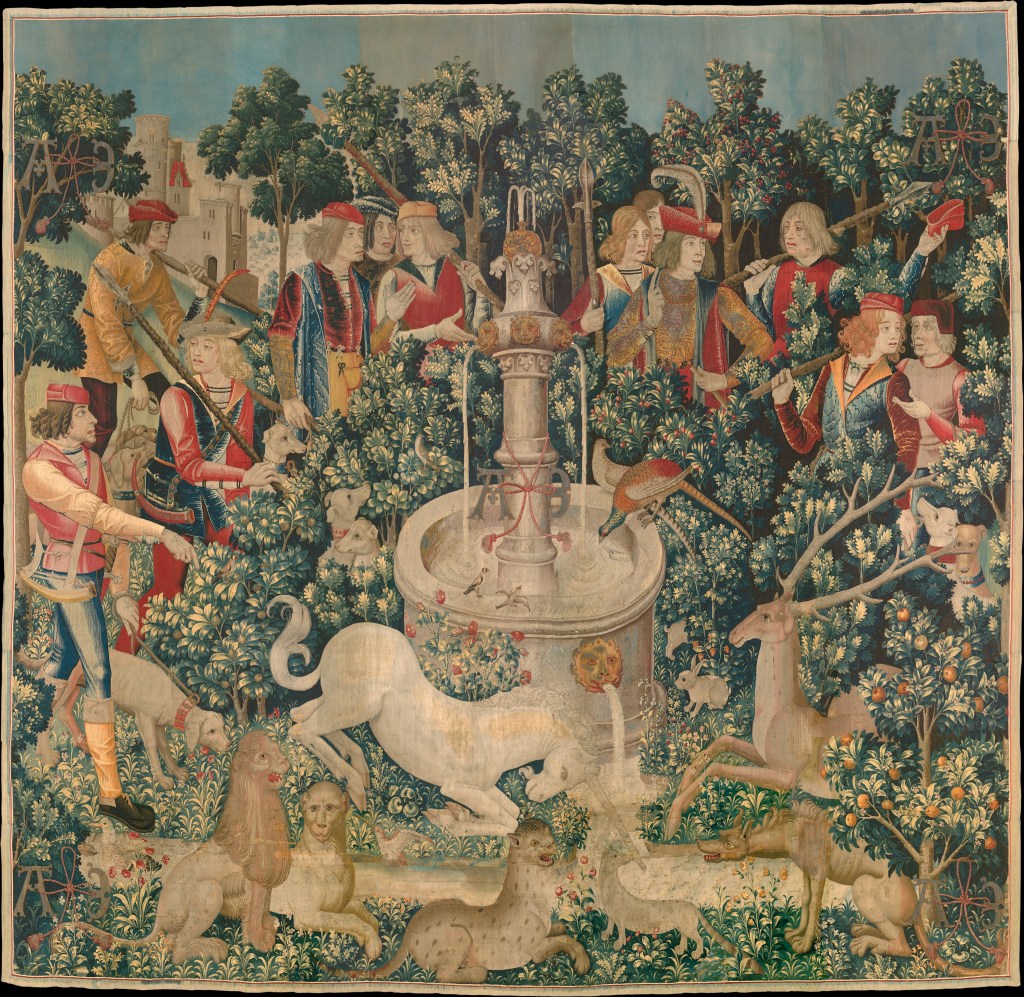
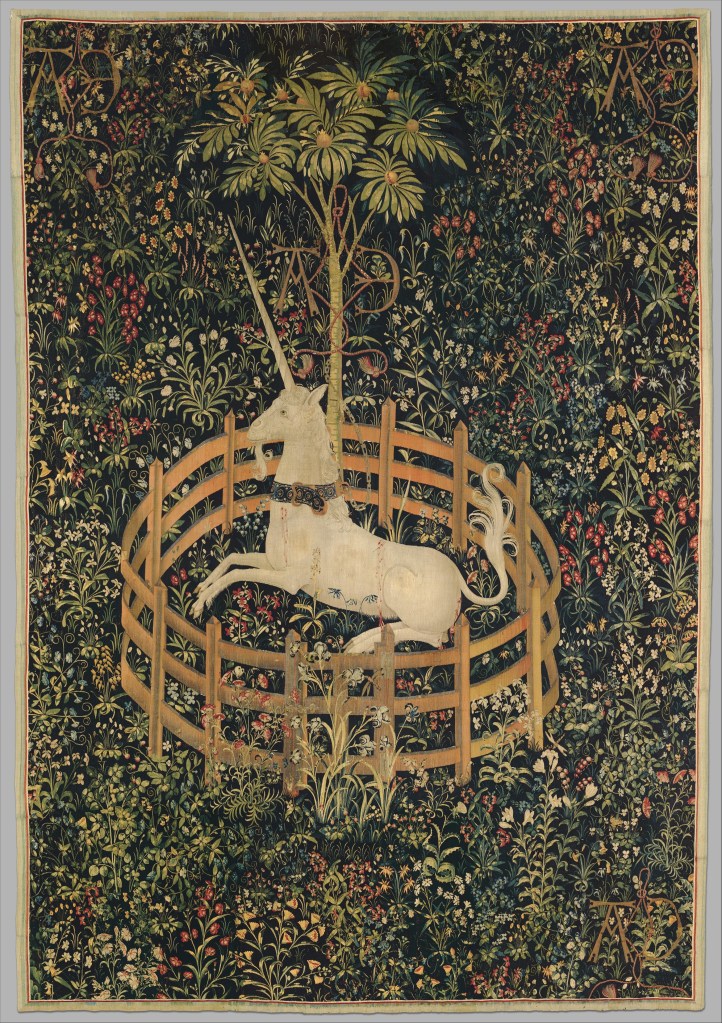
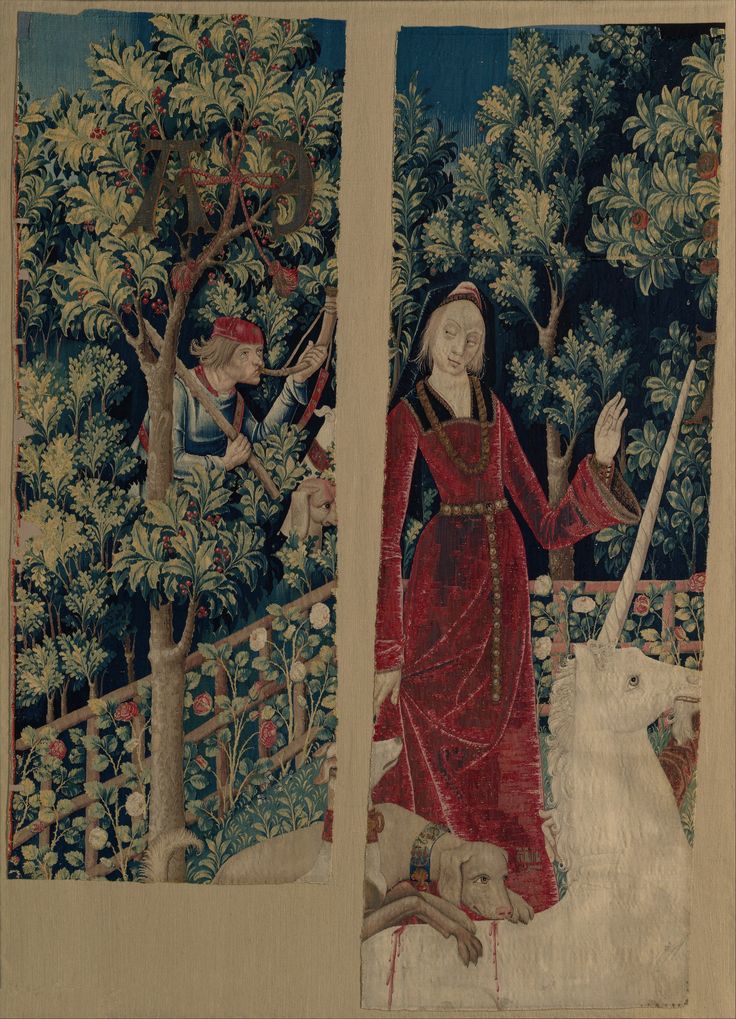
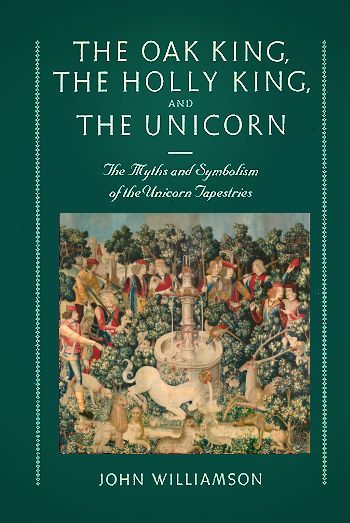
Unicorn Tapestries like the ones from the Met Museum predominately display Holly and Oak trees. To read more check out works by Adolph S. Cavallo and John Williamson.
In the Beginning
Long ago, before men or seasons, two brothers were born. One brother was radiant, and everywhere he went bloomed with life. He wore the crown of oak, a tree known for its strength, beauty and noble presence.
His brother, while equally as cheery, knew that every light needed dark, and so with him came the darkness and slumber. Trees would lose their leaves in preparation for his cold spells, and the animals would hide away in the warmth of their burrows and dens. He took for his crown the evergreen holly.
Both brothers ruled in harmony, although they did quarrel from time to time about the need for more light or more darkness. No one knows what caused their rift. Some say it was a beautiful goddess that loved them both.
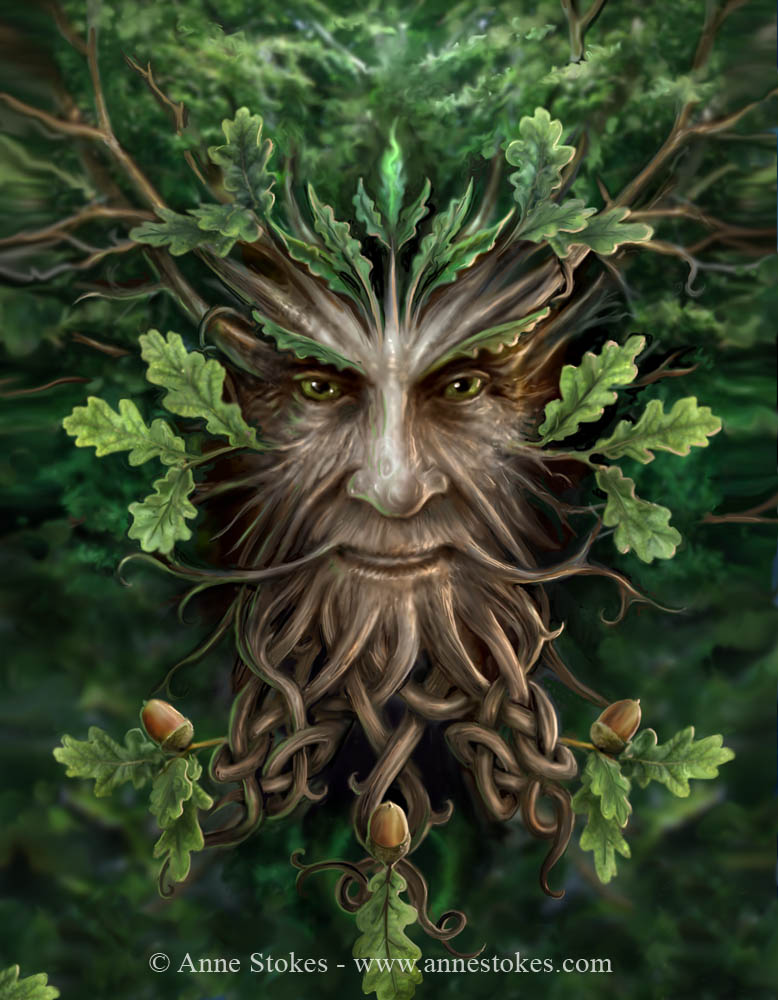
Rise of the Oak King
Others say the creation and rise of humans drove the brothers to quarrel. Whatever the reason, each day, the brothers overstepped, testing the bounds of their range. Men loved the bright, sunny days and longed to stay in the court of the Oak King. They lent their support to the Oak King, and he grew more powerful. He was their fertility God, their Green Man of the Woods. The Holly King, unsupported and alone, fled the lands for some time, and the world thrived in an unbroken summer.
Over time, the people grew weary without death and darkness. The plants whose bloom had once been celebrated were now commonplace. The eternal cycle of life and death was broken. The Oak King was weak without rest.
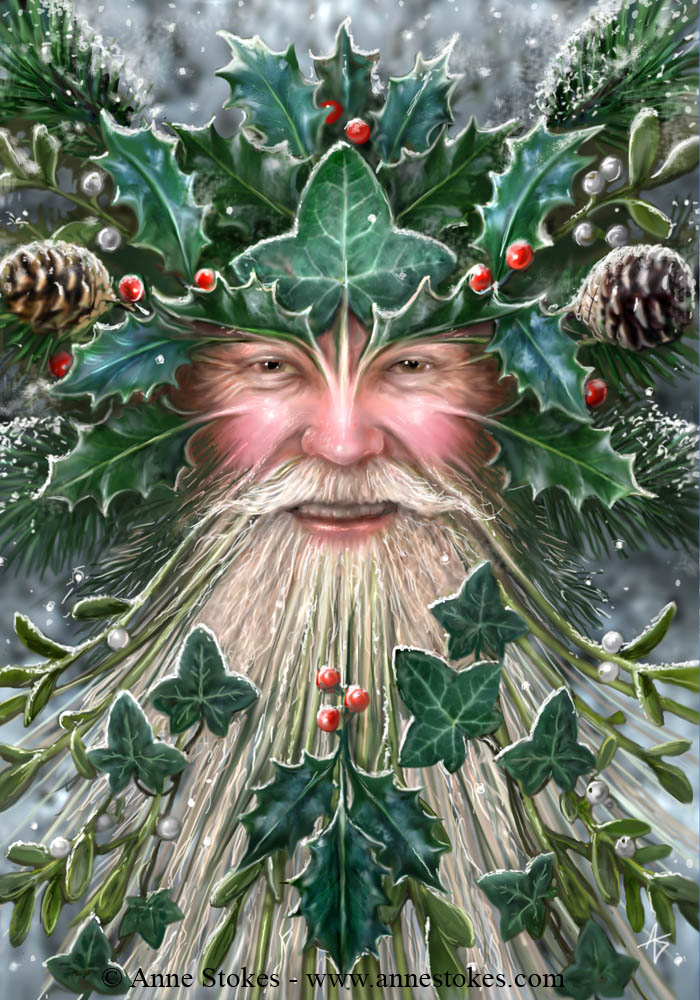
Return of the Holly King
The Holly King watched from afar until one fateful day, he returned. The two brothers fought a deadly battle for the crown. Tired and spent from keeping the world green, the Oak King fell, and his crown passed onto the Holly King, who made quick work bringing steady death and decay to the lands as he blanketed the world in snow. The days grew shorter, so the people and animals were finally able to rest.
All the trees lost their leaves and were barren- except the pine and holly trees which reigned supreme.
Some say the Holly King did not actually kill his brother but put him to rest, and the battle was a plot between them to ensure the changing of the seasons without meddling from humans. Others say he had grown cold in exile and slew his brother where he stood.
Images by Anne Stokes
The Eternal Battle
Either way, during the Winter Solstice or Yule, when the Holly King was at the height of his power, he was surprised to see his brother- alive and well. The Oak King had risen, and after a raging battle, he emerged victorious. The Holly King was defeated, and the Oak King went to work bringing Spring and life back to the world.
Each year, when the other was at its strongest, the Oak King or the Holly King would emerge to battle for the crown. You might be asking yourself, why would they choose the night when the other was at his best to battle? Surely the Oak King would be defeated at Yule when he was at his weakest and the Holly King during Midsummer.
Some legends actually shift to change the time of the battles, but Sir. James George Frazer has the best example that I could find. In his book, The Golden Bough, he writes that despite being at the height of their power, their death indicates the beginning of their failing strength and that it is time for a new King.
And so the wheel of the year is half dark and half light. For half the year, the Oak King brings life and fertility to the world before losing the battle to the Holly King.
Howell
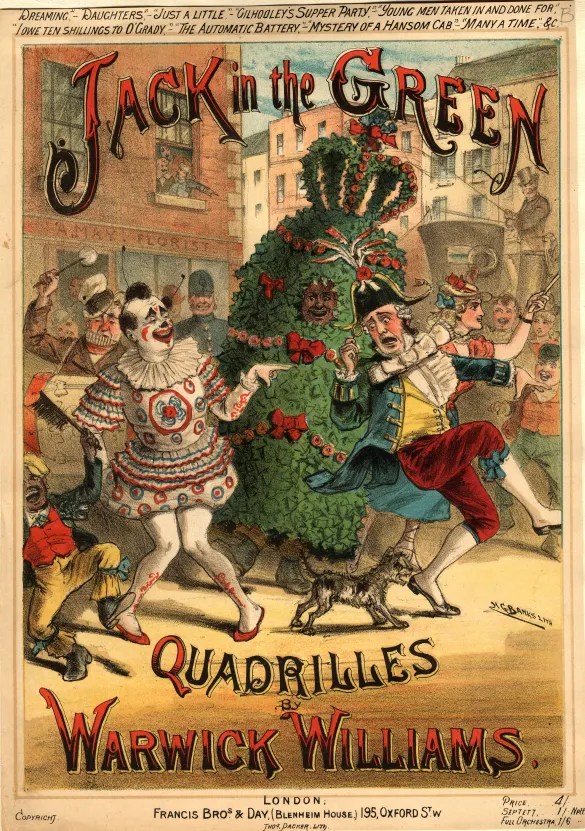
A Brief History of Father Christmas
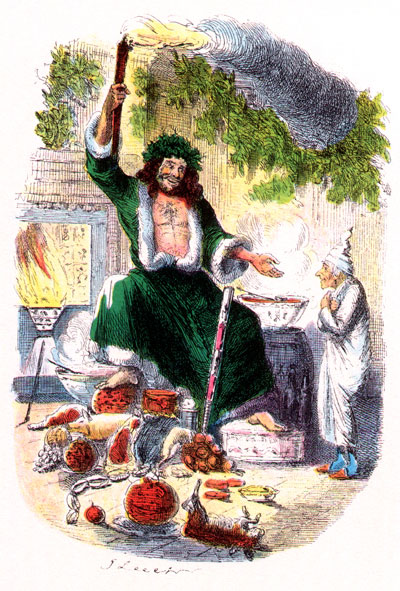
The Holly King is described as one of the earliest versions of Father Christmas (Santa Claus). This seems kind of crazy to me because Santa is supposed to be a big jolly guy who wears red, lives at the North Pole, drinks coca-cola and has an army of elves to build toys for all the good little children. Not a self-proclaimed king with leaves for a crown. Of course, commercialization might have coloured me a little, but I think a better way to approach this disconnect is that Santa Claus is just the newest version of Father Christmas.
Starting around the 15th and 16th centuries, people began personifying Christmas as “King Christmas” or “Prince Christmas.” At this point, the figure was mainly for adults as he encouraged drinking, merriment, and feasting. Later, in the mid-17th-century, the term “Father Christmas” emerged to convince people to enjoy it in moderation. However, there was a decline in his popularity come the 18th century, so I guess people didn’t love the moderation idea.
Reboots are all the rage at the moment, and sure enough, in the 19th century, Father Christmas became the embodiment of good cheer, and soon after, Santa Claus entered the scene. Clement Clarke Moore’s poem, “A Visit From St Nicholas”, helped cement the modern ideas of jolly old Saint Nick.
The Green Fertility God
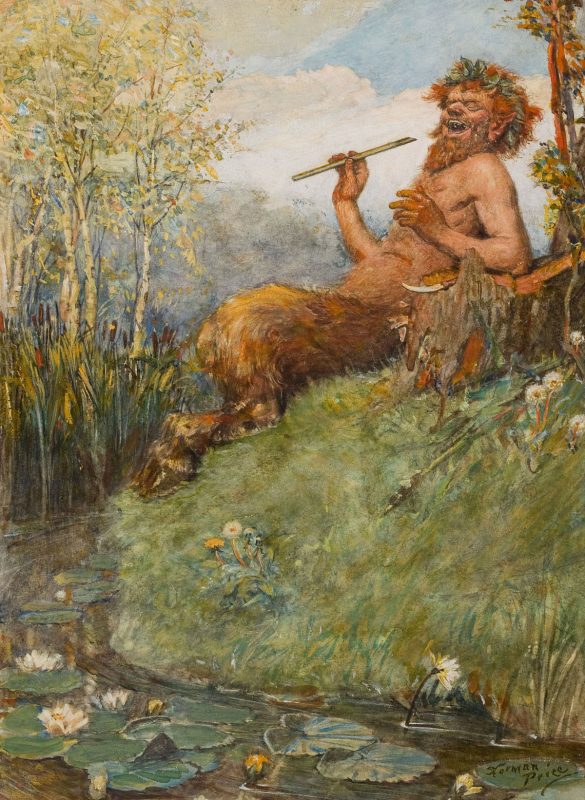
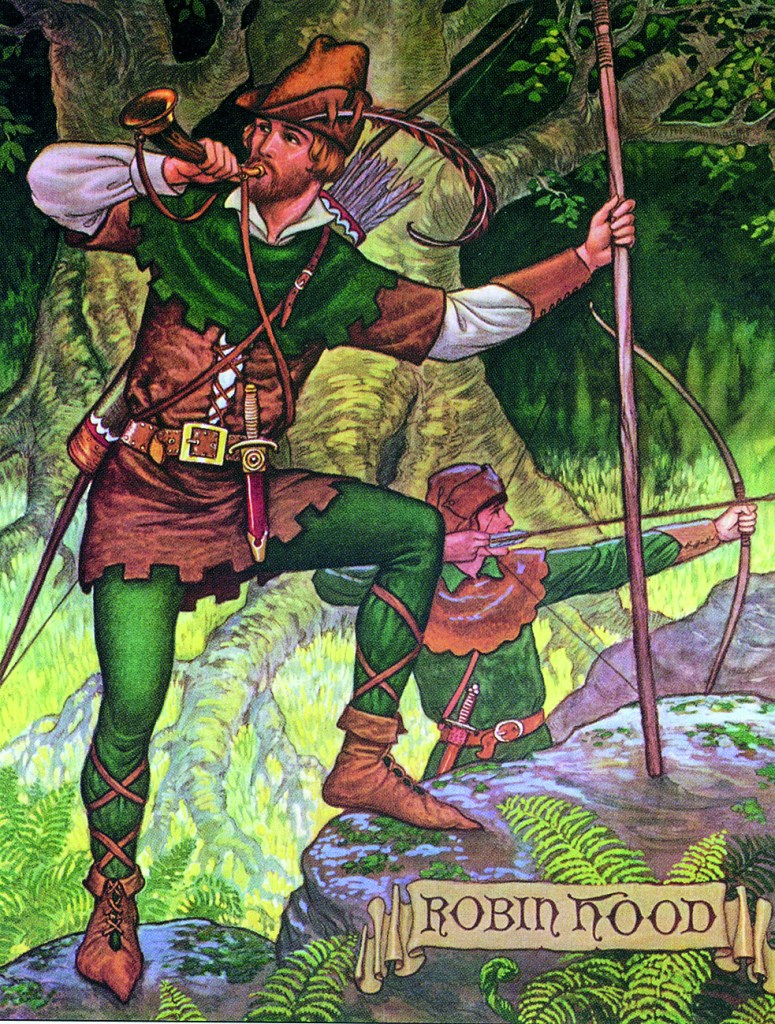
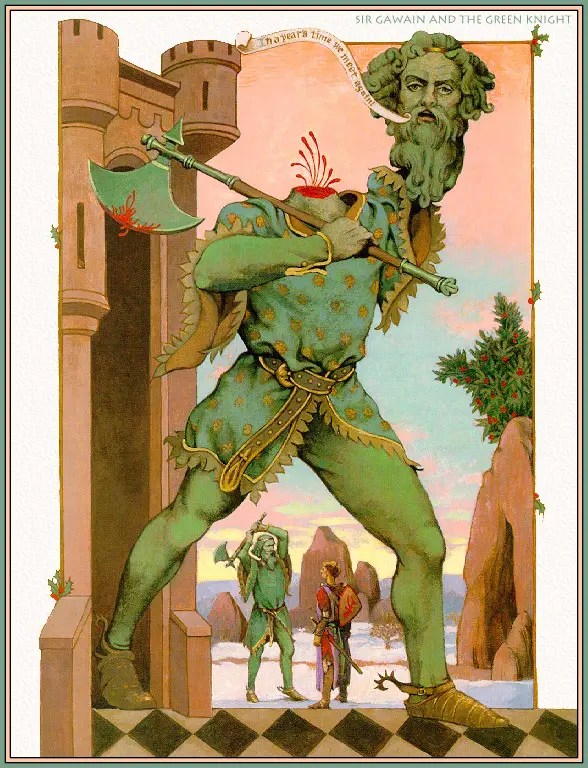
The Oak King is a symbol of rebirth, fertility and life, but he is not the only one! There are many stories of male fertility symbols including the Green Man and the Wild Man of the Woods. Specifically, the Green Man has close ties with the Oak King as both are commonly depicted as a man’s face peering out of dense foliage. Mike Harding’s book, ‘The Little Book of the Green Man,’ looks at the green man sculptures and art from all over the world including places like Iraq and Lebanon, from as early as the 2nd century. It is hard to say what this foliage head’s purpose was aside from decorative, but its recurring nature does hint at something greater than just a nice art piece. Modern connections between the Oak King, the Green Man and the Man in the Woods include Peter Pan, Robin Hood, Lord of the Rings’ Tom Bombadil and the Ents, Pan and Dionysus, as well as the Green Knight from Sir Gawain and the Green Knight.
WREN AND ROBIN
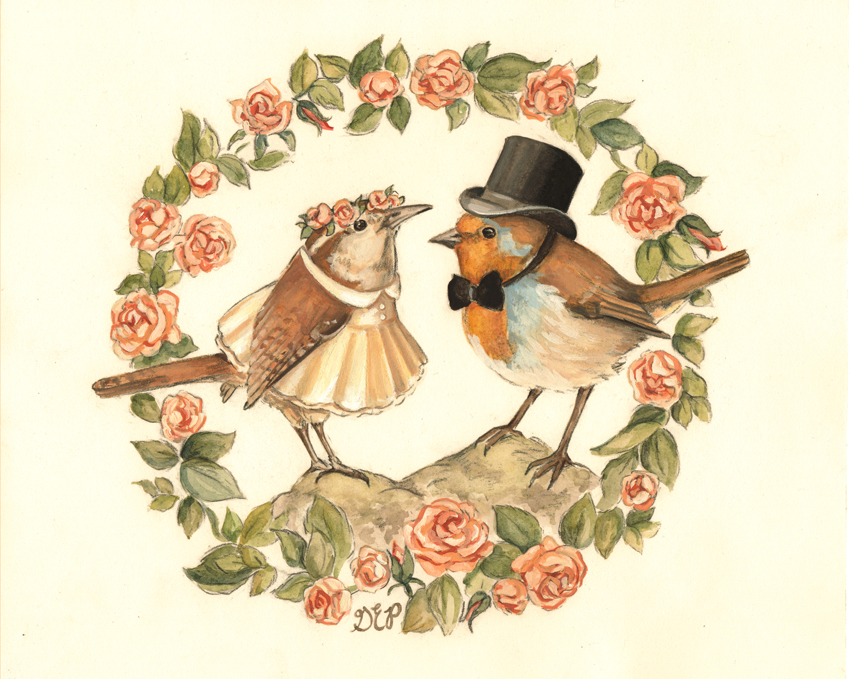
The Oak King and Holly King have many symbols, but two are the robin and the wren, respectively. Well, there are a few possible reasons for the correlation. During the winter solstice, the Oak king kills the Holly king. Coincidentally, Dec 26th is Wren Day, a day when boys go out to hunt wren. When they find one, they shoot it and then place it a top of a decorative pole. This day is observed in Ireland and other European countries. Some stories say that the origins of wren hunts are historic because a wren made lots of noise one night and awoke enemy soldiers while the Irish were ambushing them. So to this day, people are still getting revenge on the loud wren. Other stories suggest that the wren is a representation of the previous year and needs to make room for the robin, a symbol of the new year.
Image: The marriage of Cock Robin to Jenny Wren by Gretchen Ellen Powers
Wiccan? Celtic? Made up?
When you begin looking up the origins of this legend, there are a lot of references to Celtic stories, but as goes with most old stories, we could not find a direct source. Instead, the role of the two Kings seems to come from their conflicting natures and their roles in the wheel of time. The mighty and wise Oak changes colour and falls while Holly prevails all year round and is centre stage during winter months. Both plants were significant to the Celts, but there is no evidence of a story relating to the two Kings.
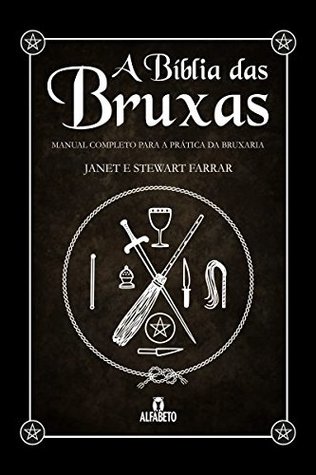
However, there is also a case for the legend having modern Wiccan roots. In Janet and Stewart Farrar’s 1981 book, ‘A Witches’ Bible,’ they write about the twins and their sacrificial mating with the Great Mother. The mating ritual for the Oak King is on Bealtaine and the Holly King mates on Lughnasadh. They also make a case for the twins to be a personification of light and dark as two sides of the same Horned God.
Sibling Rivalry
Growing up, I had two older siblings. We usually got along splendidly- that is until we broke out the card games or Mario Kart. Suddenly, all bets were off as we competed against one another in the hopes of winning. While we may not fight each other for ultimate control every year, I can sympathize with the sibling rivalry between the Holly King and the Oak King. And I’m not the only one. The sibling rivalry trope is very common from biblical references (Able and Cain) to classic rivalries (Remus and Romulus) and modern-day takes.
My favourite example is Ross and Monica from the Friends television series. They often gloat about their successes and remind others of their past failures. Like the time they start telling their parents each other secrets in an attempt to get even with each other. Ross tells them that Hurricane Gloria didn’t break the porch swing, Monica did! Monica returns the favour by telling them that Ross had been on leave from his job for the past year. While they never end up fighting to the death like the Holly and Oak King, they do stay out all night in the cold, fighting over a football to win the coveted Geller Cup.
Sources and more reading

 Tales from the Enchanted Forest