
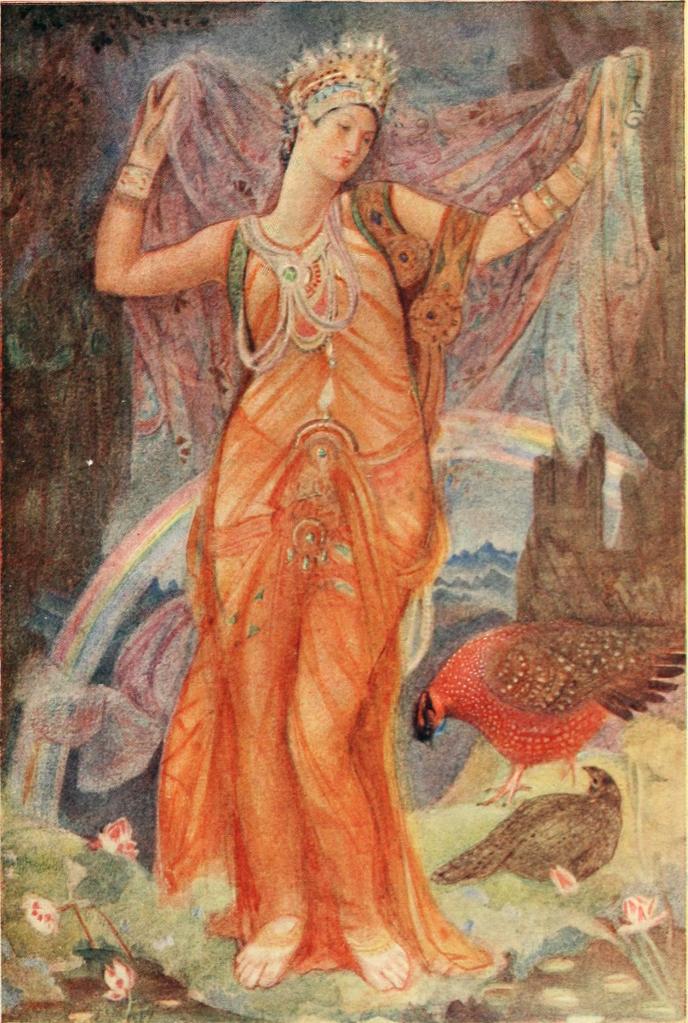
Seasonal Myths of Spring: Inanna and the Cycle of Rebirth
The season is finally shifting! While we escape the clutches of playing “what do I wear so I’m not freezing and or boiling by noon,” a certain goddess escapes the underworld. This time it’s Inanna!
Image by Evelyn Paul from Lewis Spence’s Myths and Legends of Babylonia and Assyria (1916)
Spring Myths and Seasonal Tales
Seasonal myths are explanatory tales that explain how the seasons came to be. We’ve covered many different tales like the ever popular Oak King and Holly King Tale. We also covered the Homeric “Hymn of Demeter” which lays out the story of Persephone’s descent (re: abduction) into the underworld. A classic spring myth explaining the death and rebirth of the natural world.
However, Persephone wasn’t the first goddess to descend into the Underworld.
The first that we know of was a Sumerian Goddess. Inanna.
This post will detail some of the background to her famous descent into the underworld. Namely how she steals the Mes of Civilization from her father, is spurned by King Gilgamesh and gets her revenge on the man at the great cost of her brother-in-laws death.
Our main reference has been “Inanna: A Transformative Guide to Rediscovering the Sacred Feminine” by Diane Wolkstein and Samuel Noah Kramer but more will be linked at the end!
Inanna: War, Love and Fertility
The cycles or myths about Inanna span not just in Sumerian myths but also Akkadian, Babylonian, Greek and Roman. Inanna can be seen as early iterations of Ishtar, Aphrodite and Venus. Just like them, she was more than just a Goddess of love and beauty. She was a goddess of war, fertility, harvest and procreation.
Many of Inanna’s myths were seen as templates for other Goddesses like her love story with her husband, Dumuzi, relating to the story of Aphrodite and Adonis. But, we’ll get back to him.
These tales come from some of the earliest tablets and poems relating to the Goddess Inanna. Each is a separate story, but for the sake of storytelling, we have combined them together.
Inanna’s Heist for the Mes

Inanna was the patron God of Uruk and while hers was a great city, the seat of civilization still sat in her father’s city of Eridu.
There, the great God of water and human culture, Enki, kept the Mes which each embodied one aspect of human civilization. Everything from truth, victory, weaving, writing, kingship to prostitution had a Me. In order for her city to grow and therefore her worship and fame, she would need to travel to his temple, his Abzu, and take them from him.
A translation of the text can be found here on the Oxford University’s Electronic Text Corpus of Sumerian Literature website.
When she got there, she was greeted by her father’s servant, Isimud. Her father was happy to see her and she revealed that she had come to drink and feast with him. They drank beer and with their bronze vessels overflowing, they toasted and challenged each other to have more!
Winning a Drinking Contest
Once her father’s face was red with spirits, Inanna broached the question she had come there to ask. She asked if her father had seen how wonderfully her city was growing and how the people of Uruk were flourishing.
Had he noticed that they were flourishing and upholding the honour of the Gods? Would her father not perhaps want to see another great city like his own? She lay the flattery on thick before asking if he would be willing to impart the Me onto her to take back to her city.
Her father swayed in his seat before rising so suddenly that Isimud had to rush to steady him. Enki raised his cup and toasted his daughter, “In the name of my power! In the name of my Holy Shrine! To my daughter Inanna, I shall give the high priesthood! Godship! The noble, enduring crown! The throne of kingship!”
Isimud was stricken with horror and he tried to intervene, but Inanna swiftly interrupted with the rise of her own cup as she cried, “I take them!”
Fourteen times Enki toasted Inanna and each time, he gave her another Me. Fourteen times, Inanna accepted. Fourteen times, Isimud tried to interrupt.
Still reeling with drink, Enki finally declared the night was over and asked his sukkal, Isimud to gather the Me and prepare the Boat of Heaven for Inanna to return safely to her city. Having no choice, the servant obliged and Inanna set off at once.
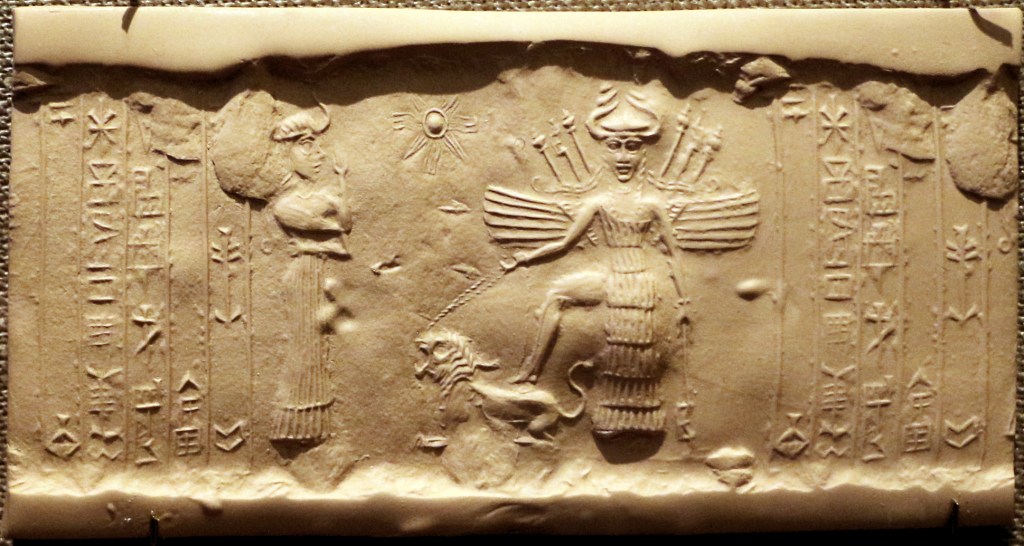
Ancient Akkadian cylinder seal depicting the goddess Inanna resting her foot on the back of a lion while Ninshubur stands in front of her paying obeisance, c. 2350–2150 BCE (Wikimedia Commons uploaded by Sailko)
Hangover Blues
Later, when Enki’s eyes went from glassy to clear and the fog in his brain lifted, the great God looked about his city, Eridu, and called to Isimud.
“The high priesthood? The noble enduring crown? Where are they?” he asked.
“My king has given them to his daughter,” Isimud replied.
“The art of the hero? The art of power? Treachery? Deceit? Where are they?”
Fourteen times Enki asked where the various Mes were and fourteen times Isimud replied that they were given to Inanna.
Growing red with anger and rage, Enki asked where the Boat of Heaven was now. Isimud replied that they were probably just at the next port over since there are seven between Eridu and Uruk.
Incensed, Enki sent his divine attendant and a group of sea monsters to go seize the boat. They were not to hurt his daughter, but she must not get the Mes to Uruk.
Piracy and Inanna’s Great Escape
Isimud did as bidden and quickly overtook Inanna at the next port. Inanna’s screams and insults were so loud that they could be heard from a great distance and her Vizier, the Goddess Ninshubar, intervened on her behalf.
Isimud and the sea monsters pursued them, but each time, Ninshubar intervened until Inanna made it to Uruk safely. When she arrived at Uruk, her people celebrated with much feasting and glory. She had transferred the seat of civilization from Eridu to Uruk.
Unfortunately, she had also angered her father.
Inanna, Uruk and King Gilgamesh
Uruk grew and flourished and eventually, it had a great King who became the subject of The Epic of Gilgamesh.
Gilgamesh and Inanna did appear to have a cordial relationship in the tale of the Huluppu Tree, where Gilgamesh helped cut down the tree to make her a throne and she in turn gifted him magical objects.
Rejection is not taken lightly by a Goddess
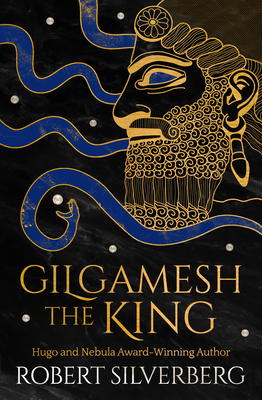
Things changed in the Epic itself. Gilgamesh and his wild-man friend, Enkidu, just finished killing the demon Humbaba in the Cedar Forest with the help of Inanna’s twin brother, Utu or Shamash. The two heroes were cleaning up when Gilgamesh was approached by the goddess Inanna with an invitation for a different kind-of reward.
“Gilgamesh the King” by Robert Silverberg
As a Goddess, especially as one of the most powerful goddesses of her pantheon, Inanna was not prepared for Gilgamesh’s reaction. You see, he took one look at her and scoffed, “Your lovers have found you like a brazier which smoulders in the cold, a backdoor which keeps out neither squall of wind nor storm, a castle which crushes the garrison, a pitch that blackens the bearer, a water skin that chafes the carrier.” (Sandars 85-87).
As Gilgamesh spoke, Inanna’s fury grew until she was filled with a bitter rage. Unable to harm the hero, she travelled far to her father’s shrine in Eridu. After stewing on the rejection through her trip, Inanna finally turned to her father, the God Enki, and appealed to him over Gilgamesh’s insults.
Was she, a goddess, supposed to let his insults slide? A King of Uruk belittling the Goddess of his city? How could such a thing be tolerated?
Her father responded that, well, yes. She would have to tolerate it. After all, it was her own fault that Uruk flourished and changed as it did. The Mes she had stolen not only had virtues but vices as well. This was a product of her own doing.
Family Feud
Further enraged, Inanna dropped her sad act and turned the full force of her fury onto her father. Her screaming could be heard throughout heaven and earth.
She yelled that if he would not help her, then the least he could do was give her permission to take her brother-in-law, Gulgalanna, the Bull of Heaven, into battle. If he didn’t, she would go down there herself and instead of asking, she would break open the gates of hell and drag every dead monster, creature and person up to the land of the living and let them feast on whatever and whoever they wanted.
Which would he prefer? She continued on in such a manner that finally, her father had enough. He relented. Inanna could have the aid of her brother-in-law, but nothing more.
Victorious, Inanna and Gugalanna rode down to the city of Uruk, ready to wreak havoc. The Bull first drank from the Euphrates until it was lowered and all the marshes ran dry. Then, he only has to snort once before the earth shook, opening up and swallowing a hundred men. He snorted again and this time, two hundred men fell dead. Before he could snort a third time, Gilgamesh and Enkidu entered the fray.
As Inanna watched in horror from the walls, the two heroes slayed the Bull.
Her brother-in-law, Gugalanna, was dead. Worse, her sister was waiting for him in the Underworld. Her very pregnant sister.
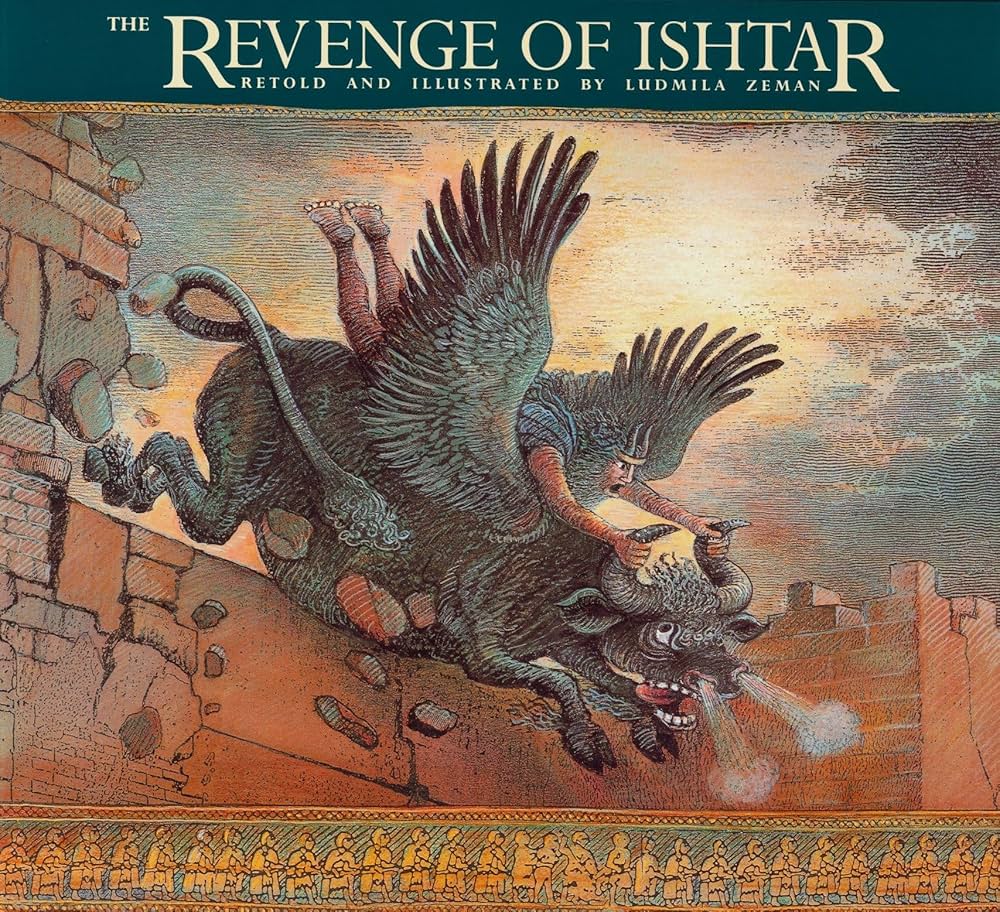
“The Revenge of Ishtar” from Ludmila Zeman‘s three part Gilgamesh series
While she was distracted, an enraged Enkidu cut the bull’s right thigh and hurled it at the wall, right at Inanna. This was his fatal mistake.
Each action the heroes had taken on their own was not enough for the Gods to act against them. But this was the last straw.
They had killed Humbaba, mutilated the Bull of Heaven and openly disrespected a Goddess. So, Enkidu was struck down.
The death of Enkidu sent Gilgamesh on an anguished journey to find eternal life, but he is not our problem or the subject of the remaining story. Join us for part two where we see Inanna descend into the underworld to confront her sister.
Sources
Inanna: A Transformative Guide to Rediscovering the Sacred Feminine by Diane Wolkstein and Samuel Noah Kramer
The Sumerians: Their History, Culture and Character by Samuel Noah Kramer
Goddess with a Thousand Faces by Jasmine Elmer




 Tales from the Enchanted Forest
_(14801964123).jpg)
