


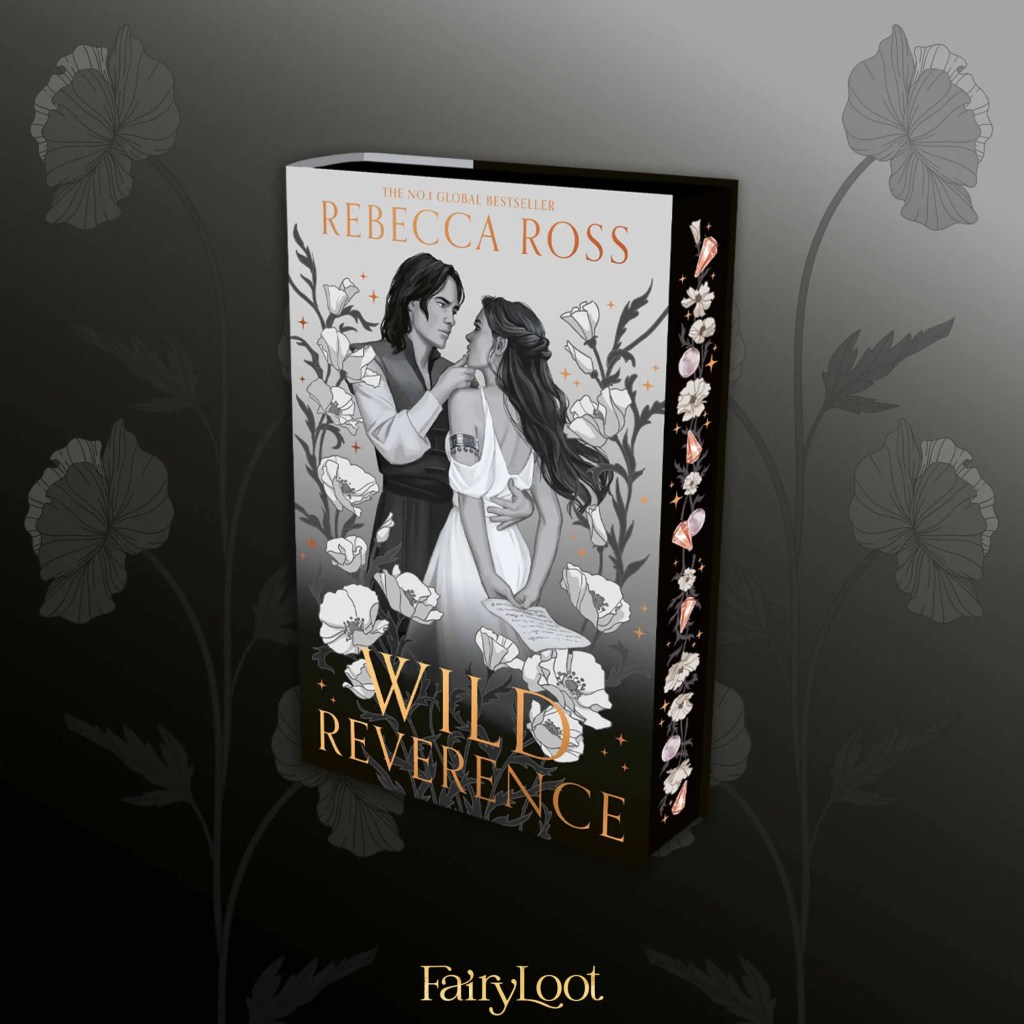
Born in the firelit domain of the under realm, Matilda is the youngest goddess of her clan, blessed with humble messenger magic. But in a land where gods often kill each other to steal power and alliances break as quickly as they are forged, Matilda must come of age sooner than most. She may be known to carry words and letters through the realms, but she holds a secret she must hide from even her dearest of allies to ensure her survival. And to complicate matters . . . there is a mortal boy who dreams of her, despite the fact they have never met in the waking world.
Wild Reverence
This review focuses entirely on the mythology and folklore inspirations behind Ross’ story so there will be some spoilers for the book and for the Letters of Enchantment Duology. Proceed with caution.
We were so lucky to receive an advanced reader copy of “Wild Reverence” from Netgalley in exchange for a fair review and there are so many different myth inspirations in this book that it was like a fun Easter egg hunt! Ross not only pulled from many rich storytelling traditions, but she made it her own in a way that felt like a masterfully crafted myth.
Set in the world of Divine Rivals and Ruthless Vows (The Letters of Enchantment Duology), Wild Reverence explores a world in which the Underling and Skyward Gods are active and alive.
When a God is born, their constellation forms in the sky and the amount of stars in said constellation determines how much power they will wield. Matilda’s story begins with her birth to Zenia, the Goddess of Winter, Fire and Cunning. While Matilda does not know her father, she grows up in the Underling Court with:
- Orphia: The Matriarch of the Underling and Goddess of Death (Sister to Rowena, the Goddess of Fate)
- Dacre: God of Healing and Lord of the Underlings who controls hounds and eitherals (wyvern type creatures) as well as the highest court in the Under Realm
- Alva: The Goddess of Nightmares and Dreams and Dacre’s half-sister
- Bade: The God of the War who can be found at his forge
- Phelyra: the Goddess of Revelry and Coin
Click to reveal the Skyward Gods
The Skyward Gods live, well, in the Sky somewhere and each have their own Halls like the Underlings have their Burrows.
- Rowena: Goddess of Fate and the Skyward Matriarch
- Thile: God of Dusk, Oaths and Summer as well as the Lord of the Skywards
- Warin: God of Spring and Rivers*
- Enva: Goddess of Music
- Shale: God of the Wind
- Luz: God of Harvest and Rain
- Demi: Goddess of Autumn
Any God can kill another and take their power for their own as long as they strike the God’s fault line with the right weapon. This concept of death for the Gods was interesting because it added stakes to the game where otherwise there would be none when it comes to immortals.
The Fates and Weaving
One of the best concepts in the book is the inclusion of weaving and fate. Rowena, Skyward Goddess of Fate, and Orphia, Underling Goddess of Death, both weave the same tapestry of life and each can undo or work around what their sister weaves.
This motif is seen prominently throughout Greek mythology with the idea of the three fates, also known as the Moirai. The three sisters control the destiny of every being using the threads of life. Clotho is the spinner, Lachesis is the one who measures the length and Atropos is the one who finally cuts it.
Hesiod’s Theogony claims the three sisters were born the Nyx: “Also she bare the Moirae (Fates) and ruthless avenging Keres, Clotho and Lachesis and Atropos, who give men at their birth both evil and good to have, and they pursue the transgressions of men and of gods: and these goddesses never cease from their dread anger until they punish the sinner with a sore penalty.”
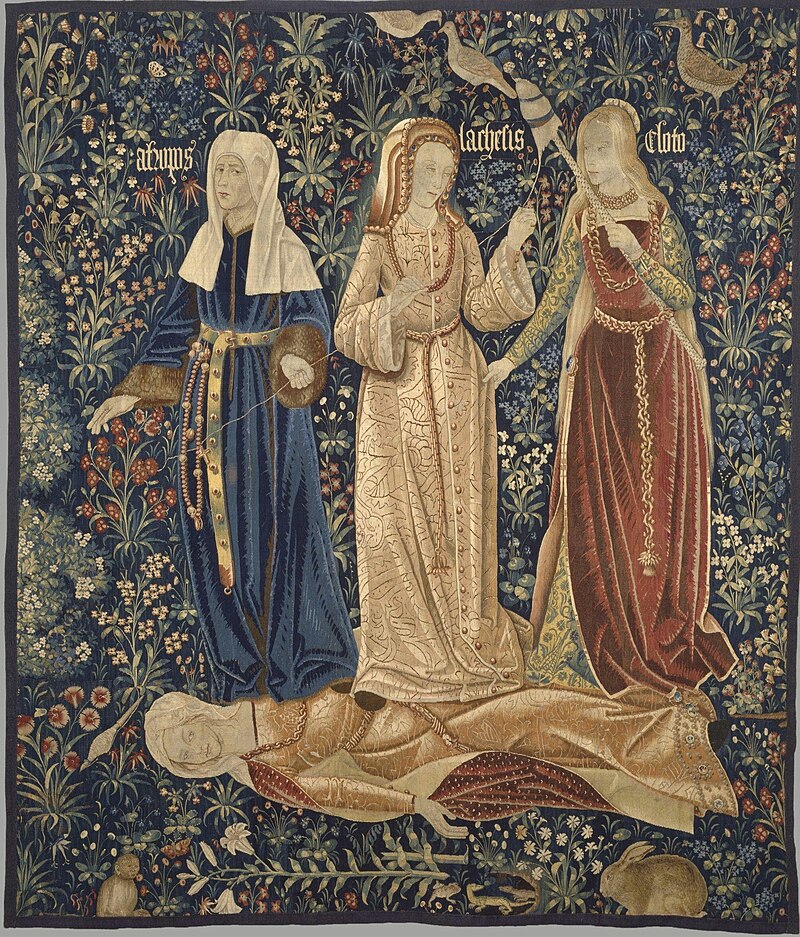
The Triumph of Death, or the Three Fates, Flemish tapestry c. 1510–1520
The Norse equivalent is another trio of weavers known as the Norn; three women known as Urd, Verdandi and Skuld control the fate of human lives. We’ve discussed weaving and Norse mythology quite a bit on our “Why the Sea is Salt” episode, especially in reference to the work song, Darraðarljóð, a song about Valkyrie’s weaving the entrails of men on the loom.
Weighing the Heart
The Gatekeeper weighs the lives of men and Gods alike when they come to the gates. To be admitted to the Mists, they must prove that they are worthy – not through good deeds or bad deeds, but through good stories. The idea of “weighing souls” on a scale brings us to the Egyptian Book of the Dead. Once dead, the soul would eventually arrive at the Hall of Maat where their heart would be weighed against the Goddess Maat’s feather. To the Egyptians, the heart was where memories were kept so it could testify against or for the worthiness of a person.
While the weighing of the hearts symbolizes a physical judgment, the idea of ‘judgment’ after death is prevalent in the religion and mythologies of almost every culture (atheists aside). We have the pearly gates, Hades, Hell and so many more iterations of what the underworld looks like. If you are curious, you can check out our latest episode on Katabasis!
Katabasis and Matilda
Katabasis refers to the hero’s journey to the underworld. As the Herald of souls, Matilda discovers that not only can she travel between the wastes and the other realms, but that she can bring souls back to their bodies. The catch? She has to get them through their worst nightmare first.
When bringing Nathaniel back, the Gatekeeper warns them not to let go or turn back which reminds us of the Orpheus myth. In the famous tale, Orpheus tried to bring his dead wife, Eurydice, back from the dead and he was granted his wish as long as he did not turn around to see her before they made it out of the underworld.
One of the hardest trials Matilda has to face is retrieving Bade’s soul and leading him back. I cannot believe that the first draft of the book did not have Bade! His relationship with Matilda is simply lovely and watching the reversal of the Orpheus role was heartbreaking. She leads his soul through his nightmare knowing and then he has to go through the waste door, trusting that she is behind him.
The Myth of Persephone and Hades
If you’ve read “Divine Rivals” or “Ruthless Vows” then you will recognize the names Dacre, Enva and Alva. While a minor part of this story, we still have the references to Persephone and Hades.
Letters of Enchantment Refresher: Dacre and Enva (SPOILER)
In the Letters of Enchantment, we learned that Dacre wanted Enva, the Skyward Goddess of Music, and sent his creatures to terrorize the mortal realm until she finally gave in and agreed to marry him and reside in the Under Realm with him. Except Enva used her music to put the Underlings to sleep and escaped back to the Skywards. In Divine Rivals, both Gods are waging war against the other and using humans to do so. Enva’s music persuades people to enlist for her side while Dacre lays waste to the lands he comes across.
In an interview with Fantasy Hives’ Nils Shukla, Ross said that one inspiration for their story was the myth of Hades and Persephone.
Wild Reverence Refresher
After Matilda fled Skyward and let enough time pass, she is allowed to escort Enva to the Underlings for the wedding feast. Here we see the myth that was told to us in the Letters of Enchantment as it happens and learn more about the Gods backstory. I do appreciate that Ross did not make it exactly as the myth was told in the previous Duology since stories change as they get passed on and the myth of Enva and Dacre does just that.
Also, it is an interesting play for Dacre to be the God of Healing and Enva to be the Goddess of Music, especially since in the mortal realm, Enva’s music is said to have “chased human hearts and their pain; it also filled the cavities that Death inspired.” Dacre wanted to create a new union that had never been done before, one with Enva, but after she refused, he let his hounds and eitherals loose on the mortal world. The God of Healing sure does cause a lot of pain.
 Tales from the Enchanted Forest