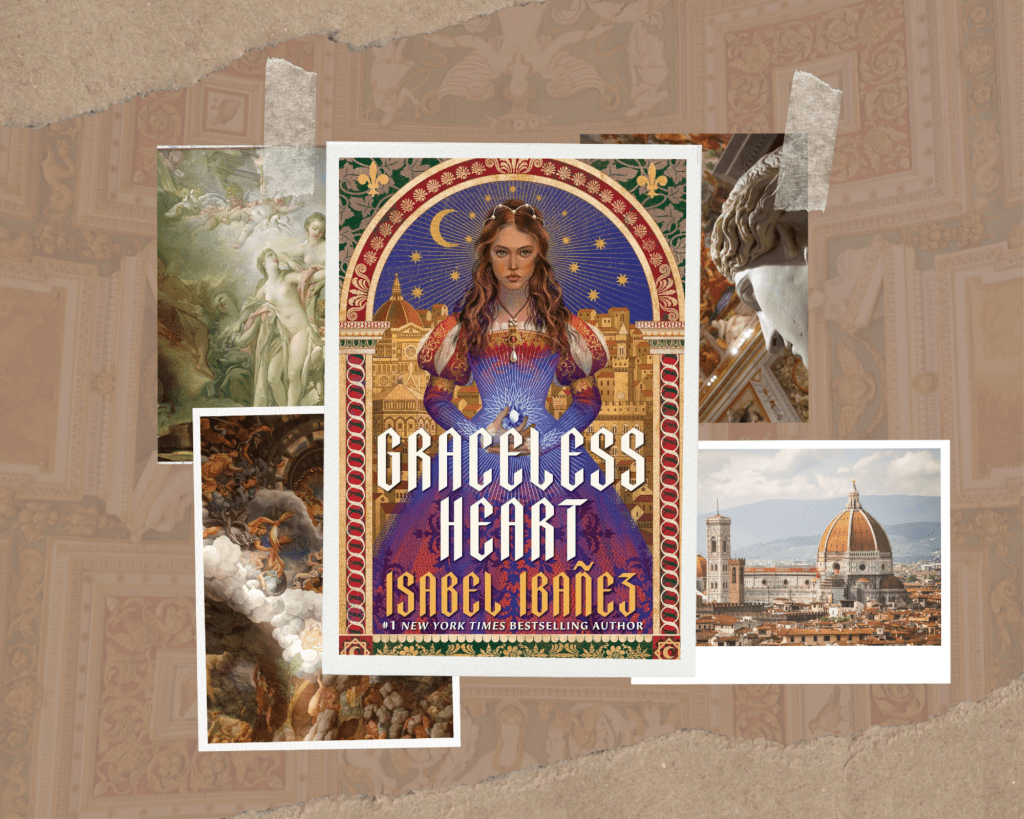
In 15th-century Volterra, sculptress Ravenna Maffei enters a competition hosted by a secretive, immortal family who offer an invaluable boon to the victor. Desperate to win so she can save her brother, Ravenna reveals a rare magical talent—a dangerous act in a city where magic is forbidden. Her revelation makes her a target, and she is kidnapped by the Luni family and taken to Florence, a city of breathtaking beauty and cutthroat ambition. There, Ravenna is forced into an impossible task where failure means certain death at the hands of Saturnino dei Luni, the family’s enigmatic and merciless heir.
Some spoilers ahead!
Graceless Heart by Isabel Ibañez
If there’s a city that feels truly alive with history, it’s Florence- especially for lovers of Greek and Roman myths. The sculptures and architecture alone are enough to make you feel like you’re in a place where the past is tangible.
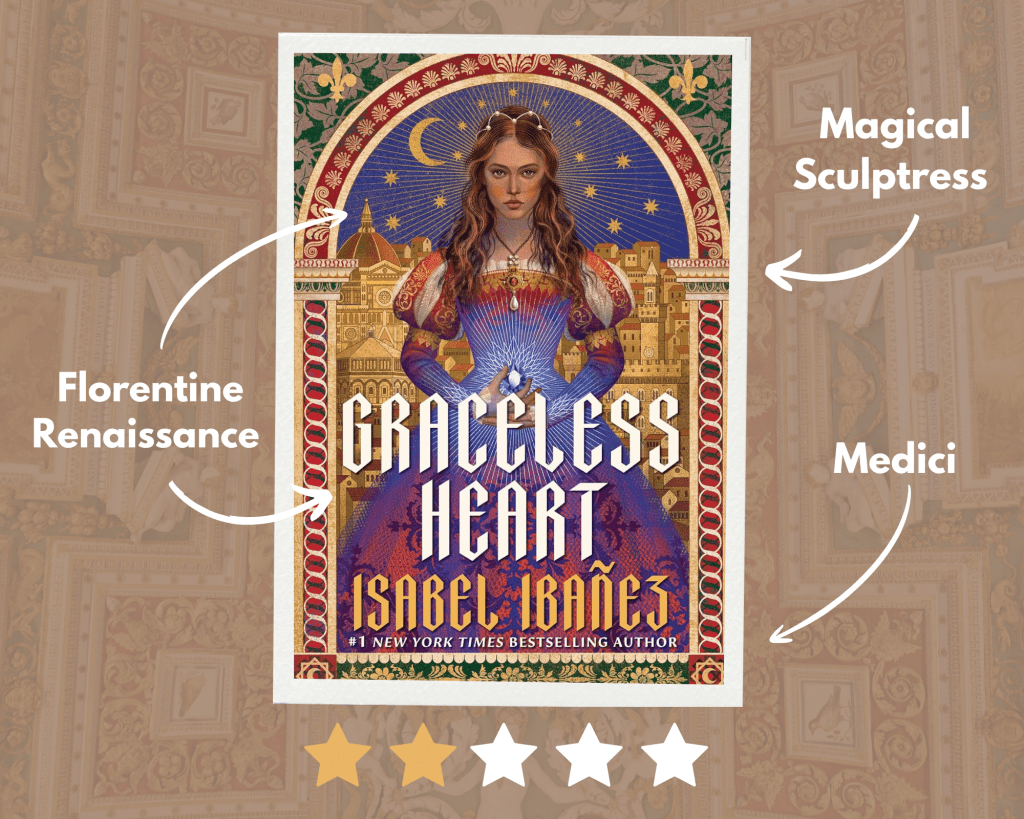
Florence during the Renaissance serves as the backdrop for Ibañez’s adult debut novel. While rooted in history, the book ultimately leans into fantasy with its magical systems, supernatural creatures, and reimagined historical figures. At the center is Ravenna Maffei, a sculptress whose magic puts her at odds with her religious family and community. Sculptures are a fitting tool in this story, especially since they are magnificent monuments to storytelling traditions on their own.
Before receiving this book as an Advanced Reader Copy (ARC) from NetGalley, I was eager to dive in, especially since I enjoyed the author’s previous duology, What the River Knows and Where the Library Hides, set in Egypt. Unfortunately, despite the promising premise, this novel fell short for me. My final rating was 2 out of 5 stars.
The Good
While I did rate the book only 2 starts, there are many great things about the book which saved it from being a “Did Not Finish” or even a 1 star read.
One: the descriptions of life in Volterra and Florence were lush. I love a good setting and the scenes with lots of description were really where the book shone. Streets, people, smells, everything seemed to come alive on the page and I appreciated the intricate details.
Two: the concept was intriguing. I love historical-fiction and I love fantasy, so to see the merge between the two as a hybrid genre is interesting (also in other books like My Lady Jane and Six Wild Crowns). Add in a magical sculptress and it seems like the heroine is set to stand out among the assassins and princesses that dominate fantasy series.
Three: religion and the power of the Pope were massive themes in the book which was interesting to read in a historical-fantasy novel. Watching Ravenna come to terms with what her religion means to her in the face of corruption and radicalism was especially intriguing since it does mirror real world events (namely Martin Luther’s 95 Theses against letters of indulgence).
Where Things Fall Apart
Where the story falls apart is the countless inconsistencies and the flat characters. There were many moments in the story where characters deviate from their previously established characteristics/ goals just to make choices that do not make sense to the reader. There are many perspectives and while most characters have a clear “want” to drive them, the main character is the most confusing of all. Her actions are almost always spurred by what the plot needs her to do next instead of what the character herself should logically (or even emotionally) do. To be honest, I found her frustrating and lacking common sense.
More often than I would like, the female protagonist, Ravenna, and the male main character, Saturnino, had conversations that felt fabricated and out of place. They would have snarky back and forths, deep conversations about religion and romantic lines, but it just gave me whiplash watching the forced enemies to lovers trope unfolding. In general, their romance was stilted and seemed entirely based on tropes and not substance.
The other massive issue was the inconsistency with the powers and magic system. To avoid any spoilers, there are many key moments in the book where her powers should have logically simmered or reacted (even if she did not use them) but they did not. In fact, her powers which started as a main plot point almost become irrelevant as the story went on. This was honestly such a shame because the book had so much promise.
Want more?
Here are some of the myths that came to mind while reading this novel. There is so much inspiration to draw from when it comes to statues, sculptors and the Florentine renaissance.
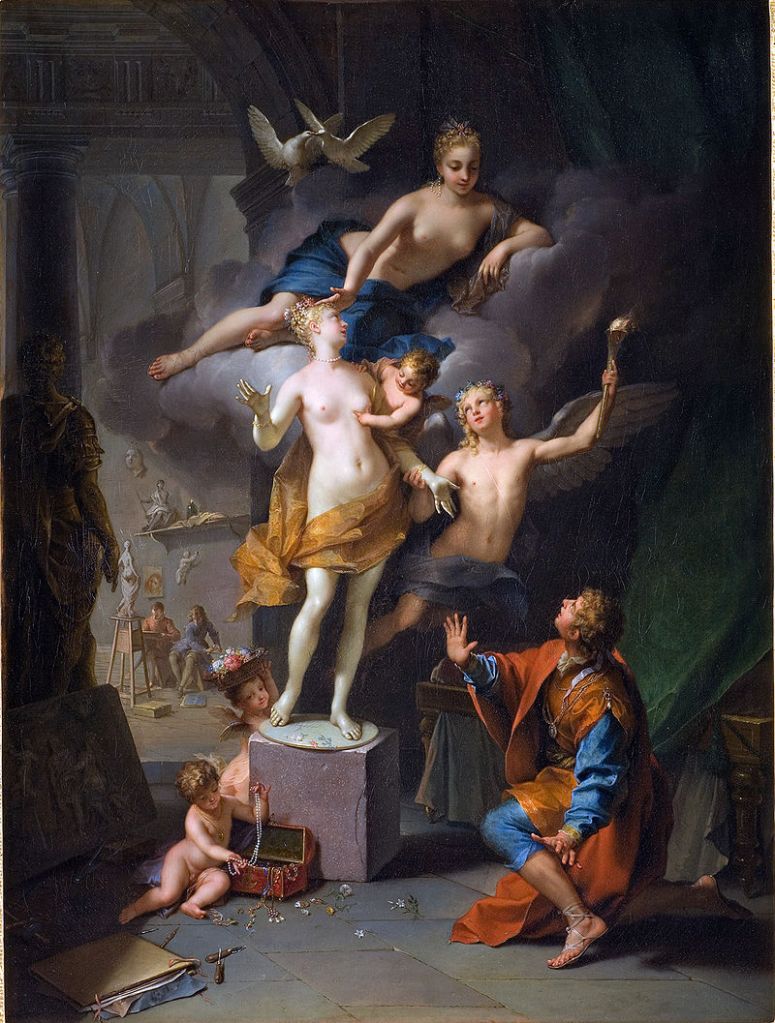
Galatea and Pygmalion
The most popular stories involving sculptures come from Ovid’s versions in his Metamorphoses. While the majority involve people turning into sculptures, the story of Galatea is one of the few that features the “breath of life” trope. This trope also appears in other myths where the gods create life such as in the myth of Pandora, the first woman. Another example is the tale of Deucalion and Pyrrha (Baucis and Philemon in Ovid’s version), in which humanity is wiped out by a flood sent by Zeus, sparing only two generous humans, Deucalion and Pyrrha. The couple are instructed to throw stones behind them, which then transform into humans, thus restarting the human race.
In Book 10 of Metamorphoses, Ovid tells the story of a sculptor named Pygmalion, who fell in love with a statue he had created of the perfect woman after vowing celibacy from mortal women. During a celebration for Aphrodite, he begged the goddess to grant his statue life, and his wish was granted. When he next kissed the marble, it turned to flesh, and an overjoyed Pygmalion went on to marry the statue.
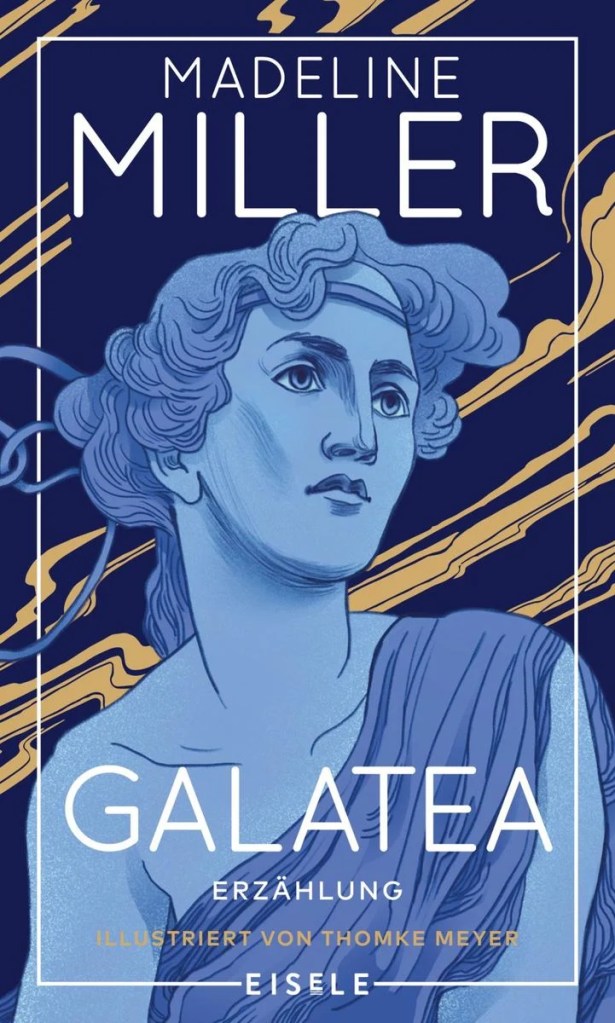
In Madeline Miller’s novella, Galatea, she explores a different reading of the story from Galatea’s perspective. Under the control of her husband, Galatea lacks agency and suffers from Pygmalion’s unrealistic expectations for her to remain ‘unsullied’ even after she gives birth to their daughter. The story is short, but a worthwhile read.

Niobe and her Children
Now, if you are ever in Florence then the Uffizi gallery has to be one of the top things you do. Not only does the museum have countless rooms full of sculptures, but it has one of my favourite rooms- The Niobe room.
The history of the actual sculptures is also tied to the Medici family who feature in the novel. After the discovery of the sculptures in the vineyard of the Tomassini brothers, Ferdinando de’ Medici* secured all of them in 1584 for 1600 scudi. They were then relocated to the Villa Medici on the Pincian Hill where they remained for over 200 years before being relocated to Florence by the Grand Duke Peter Leopold with permission from Pope Clement XIV. To learn more about the history of the sculptures themselves, check out the Uffizi Gallery website.
*Lorenzo the Magnificent comes from Cosimo de’ Medici the Elder’s line while Ferdinando comes from Lorenzo de Medici the Elder’s line (for a full family tree click here).
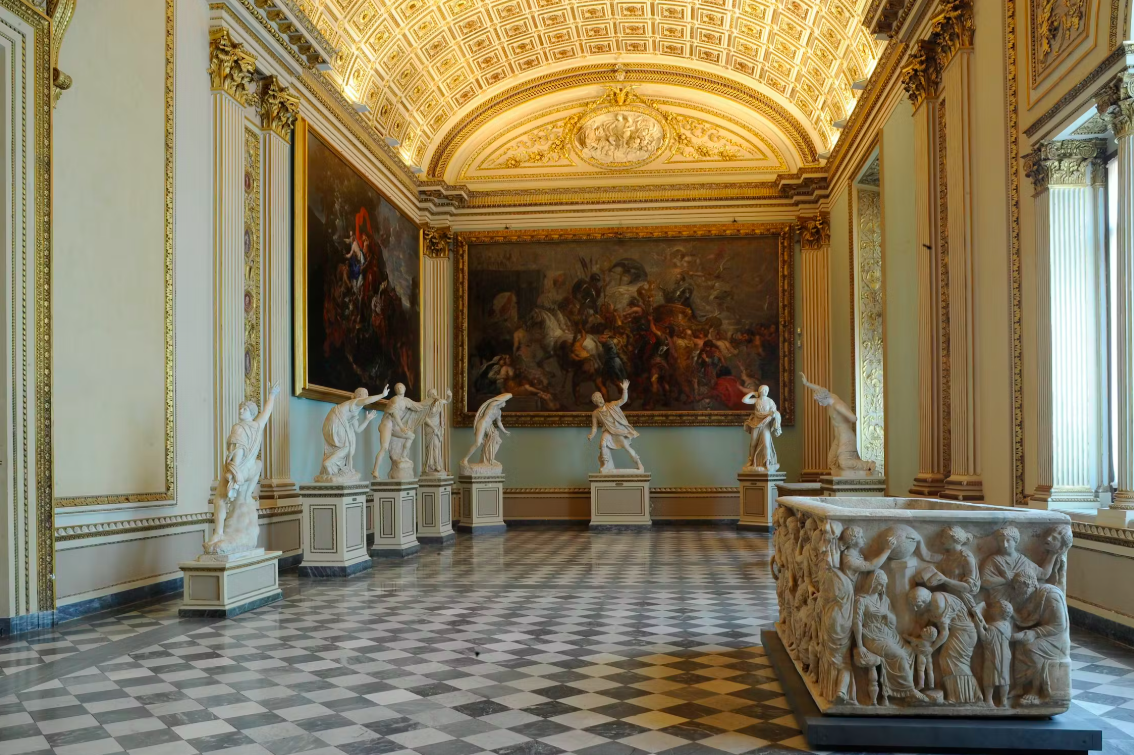
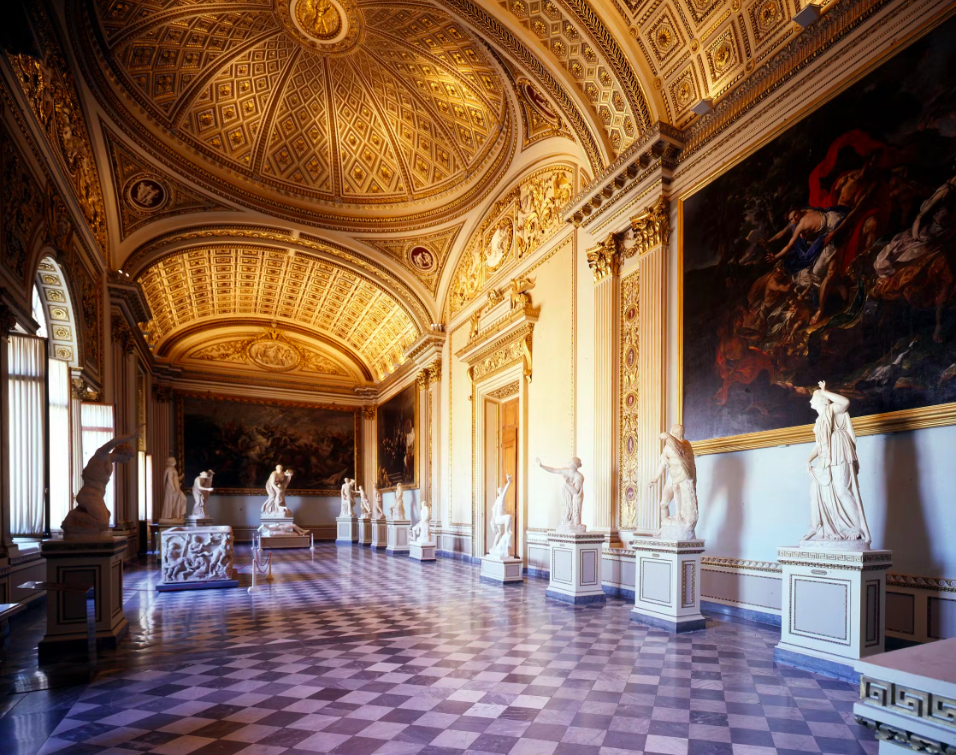
The story of Niobe goes that she boasted about her fourteen children to Leto, the mother of Apollo and Artemis. For her hubris, Apollo slay all her sons and Artemis struck down her daughters. Devastated, Niobe fled to Mount Sipylus and was turned into stone. Despite her petrification, she continued to weep and water flowed down the Weeping Rock.
Medusa and Co.
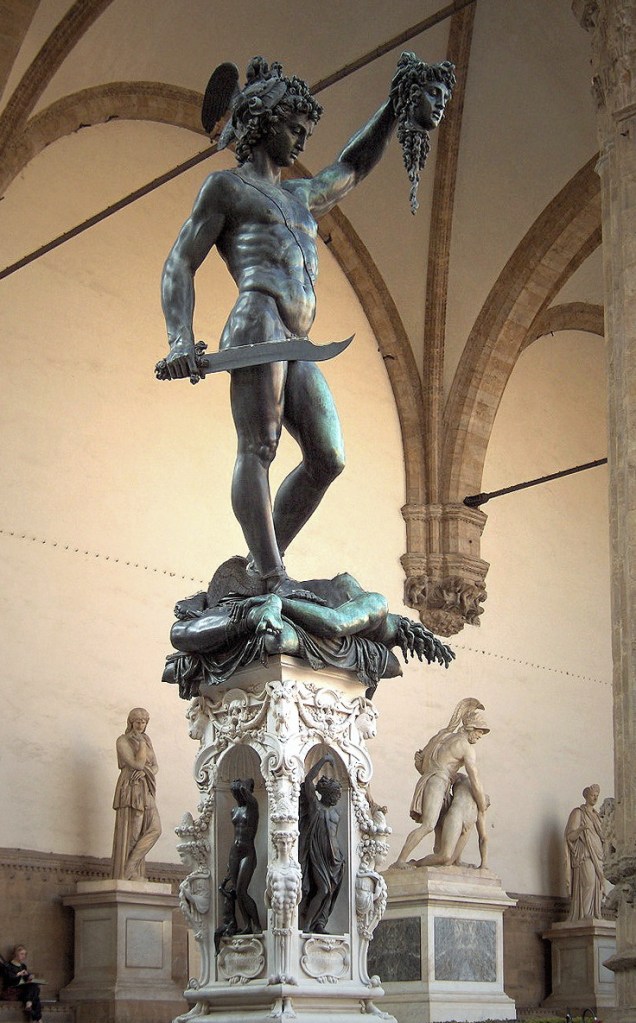
Of course, no list about myths featuring statues is complete without Medusa being mentioned at least once. Early Greek writers claim Medusa was always a monster with the ability to petrify anyone whom she lay eyes on, but later classical writers have varying accounts of her condition, namely that she was turned into a monster by Athena after being raped by Poseidon in her temple. Medusa was eventually killed by the hero Perseus and her head gifted to Athena.
You can visit Benvenuto Cellini‘s sculpture of Perseus with the Head of Medusa, in the Loggia dei Lanzi, Florence.
This book was gifted to us by Netgalley and St. Martin’s Press in exchange for a fair and honest review. Expected publication date is January 13th 2026.