The Shamans and Swords of K-Pop Demon Hunters
Welcome to Tales from the Box Office where Fox and Sparrow moonlight as TV and Movie reviewers who focus on the myths and monsters behind the fictional folklore fanfare! In this part, we will focus on Shamanism and Huntr/x.
K-Pop Demon Hunters is the blockbuster of the summer and it was only just released in June! The movie which was produced by Sony Pictures Animation and co-directed by Maggie Kang and Chris Appelhans features a fictional K-Pop girl group called Huntr/x who just so happen to also be demon hunters. This post focuses on the Huntr/x girls and their origins in Korean Shamanism.
To see more about the monster, check out our next post: The Mythology and Monsters of K-Pop Demon Hunters.
The original idea came from Maggie Kang who was born in Korea but grew up in Canada and attended Sheridan College for classical animation. Her career began at Dreamworks where she was a story artist for the Puss In Boots franchise, Rise of the Guardians, Kung-Fu Panda 3, Trolls and Over the Hedge among others.
In an interview with Geeksout, Kang said she always wanted to see Korean culture in animated films:
“As a Korean person who was born in Korea but grew up in North America, it’s been surreal but also incredible to see our culture just become… so cool? It’s cheesy but I think it’s true. Growing up everyone knew Chinese and Japanese culture well but Koreans were not even on the map.”
Maggie Kang, Geeksout interview with Michele Kirichanskaya
Chris Appelhans is no stranger to mythology either with his credits including Monster House, Coraline, Princess and the Frog, Puss in Boots, Rise of the Guardians, and the previously covered Tales from the Box Office film, The Wish Dragon.
Shamanism and Spiritual Women
The movie opens with exposition to introduce the original demon hunters: a trio of women who sang to reinforce the golden Honmoon and keep demons trapped.
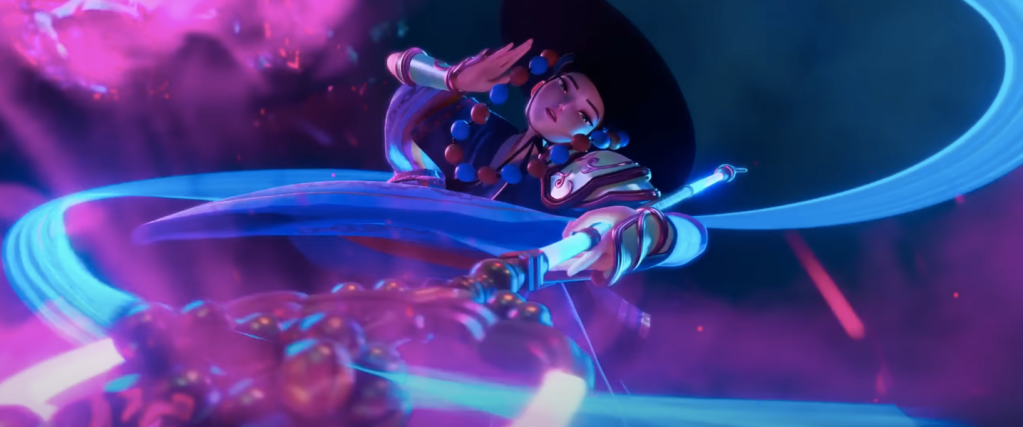
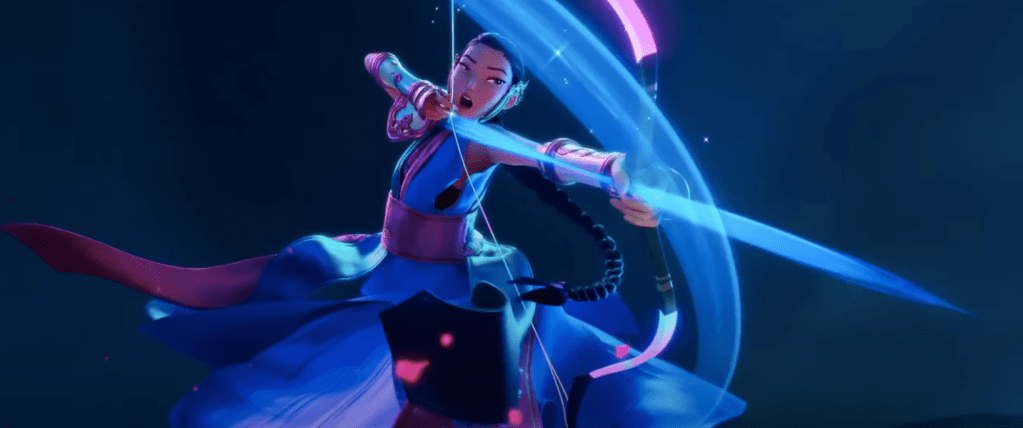
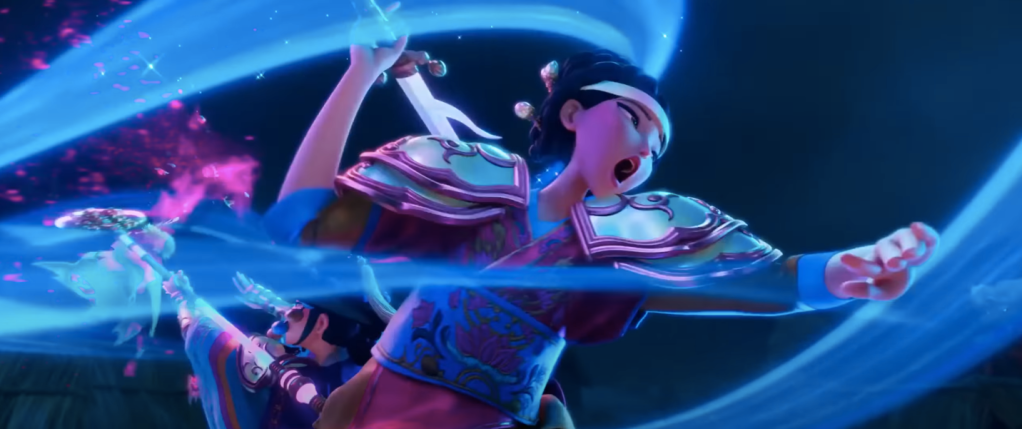

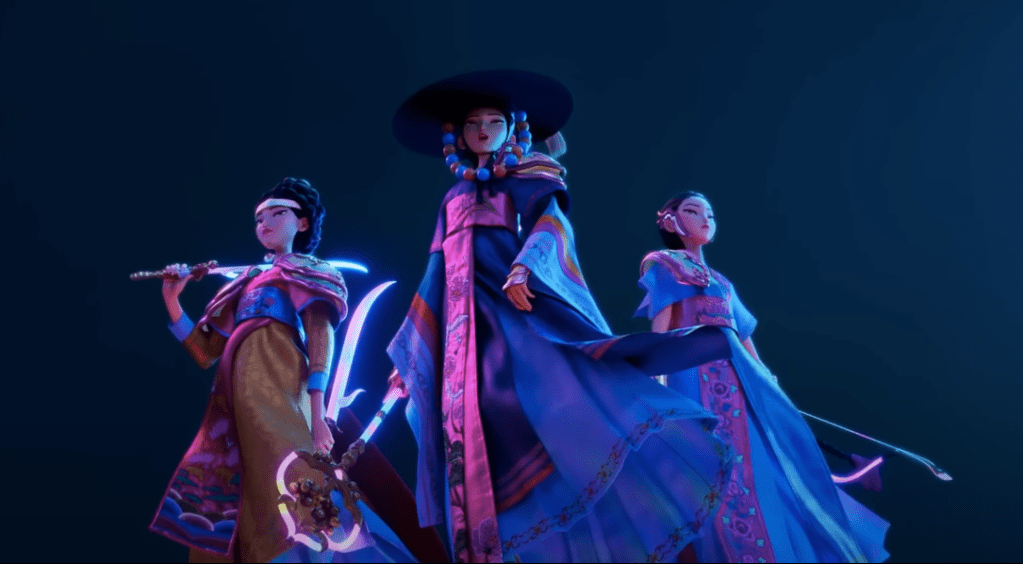
These characters are based on Korean shamans, specifically the mudang, or female shamans. Mudang serve as intermediaries between the mortal and spiritual worlds, communicating with spirits, interpreting prophecies, and guiding the deceased. There are two ways to become a shaman- either through family lineage, as we see with Rumi in the film (her mother being from the previous generation’s demon hunters, the Starlight Sisters), or they could be initiated like Mira and Zoey probably were.
“With the mythology, we wanted to root it in something that existed in Korean culture already. What it is, is Korean Shamanism,” said Kang. “Historically, Korean shamans are mostly women, which was kind of perfect for us. They were women, but they actually wore male garb, so they were dressed looking like men.”
Maggie Kang, Salon Magazine by Hanh Nguyen
Shamans perform rituals called gut, which often take into account the individual’s condition and fortune as part of a whole with nature, spirits, and ancestors causing positive and negative effects. Some ceremonies include practiced movements, songs, storytelling, prayers, and instrument playing. One rite, for example, is used to cleanse the spirit of a dead person who cannot move on to the afterlife.
The video below from KBS shows a Mudangchum dance from a Dodang-gut exorcism ritual of Gyeonggi-do Province.
A well-known tale associated with Korean shamans is the tale of Princess Bari, which is sung only during rituals held for the dead. There are so many different versions of this story, and they all vary depending on when they were told, since some include mentions of the Buddha and others include gods and guardians. Our version is a collection of the key parts as retold by Folkency Korea, an encyclopedia created by the National Folk Museum of Korea.
Princess Bari and Rumi

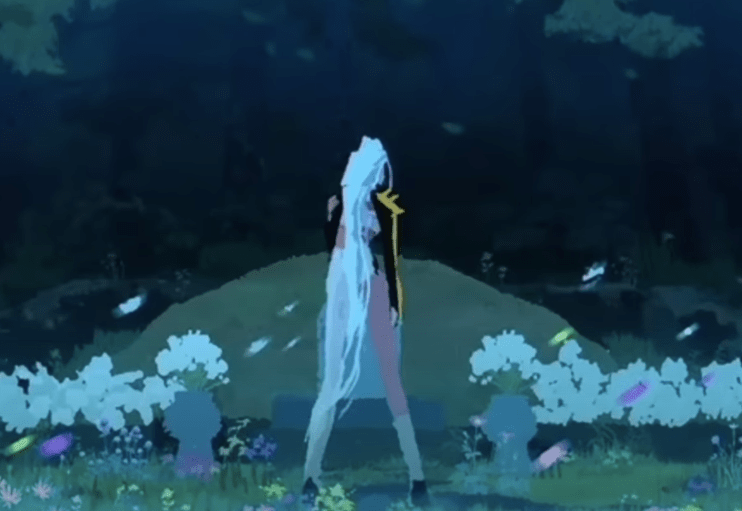
The Tale of Princess Bari, also known as the Seventh Princess or the Tale of the Abandoned Princess is considered by some as the story of the first Shaman. While Rumi is certainly not the first Shaman, she is the first demon-human demon-hunter which makes her story parallel parts of the Princess Bari tale. The images from Simon Baek’s (K-Pop Demon Hunter, Turning Red, Onward, Toy Story 4) Instagram show a side-story of Celine (Starlight Sisters) and a young Rumi caring for Rumi’s mother’s grave.
The Abandoned Princess
The King and Queen wanted to set their wedding date but were advised not to rush. However, being young and restless, they ignored this advice and married quickly. This resulted in the Queen giving birth to six daughters in a row, which, in many patriarchal societies, was considered a curse. Although the King and Queen loved their daughters and treated them well, they still longed for a son.
During her seventh pregnancy, the Queen had an auspicious dream, and the couple took it as a sign that they would finally be granted a son. But, to their dismay, the Queen gave birth to another daughter.
In a fit of rage, the King named the girl “Bari-degi,” which means “the one who was thrown away,” and had her abandoned, not unlike Atalanta and Paris from Greek myths. The girl was found and raised by an elderly couple who loved her for over fifteen years.
One day, the King (and Queen, depending on the version) fell deathly ill and learned that the only cure was the Yangyusu potion and flowers from Seocheon, the Western Heaven- the realm of spirits and gods (in some versions, it was the water of life that she sought). The King asked his six daughters to go, but each refused. Desperate, the King sent men to search for the seventh princess.
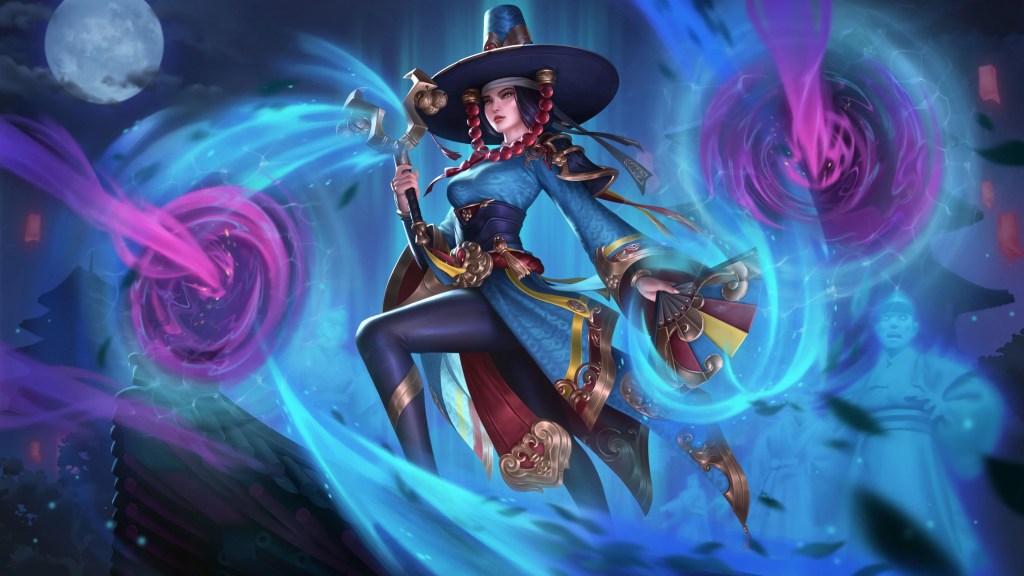
Princess Bari agreed to go and set off dressed as a man. When she arrived at the Western Heavens, she traveled through the realm looking for the flowers, and during her journey, she used a rattle and spells to save the souls of those suffering and being tormented.
Eventually, she reached the gatekeeper, and he agreed to let her have what she needed, but first she had to work with him for a time and bear him seven sons. Princess Bari agreed, and after her time in the Western Kingdom, she returned home with the potion and flowers to cure her father, along with her husband and children.
Unfortunately, when Princess Bari returned, she came across the royal funeral procession for her father. Instead of giving up, she interrupted the rites, threw open his coffin, and resurrected her father with the flowers. It worked, and for her courage and bravery, the Princess was made a deity who helped the dead, much like Charon or Anubis. She also became a symbol for shamans, and because of her associations with death, her story is the one sung during death rites.
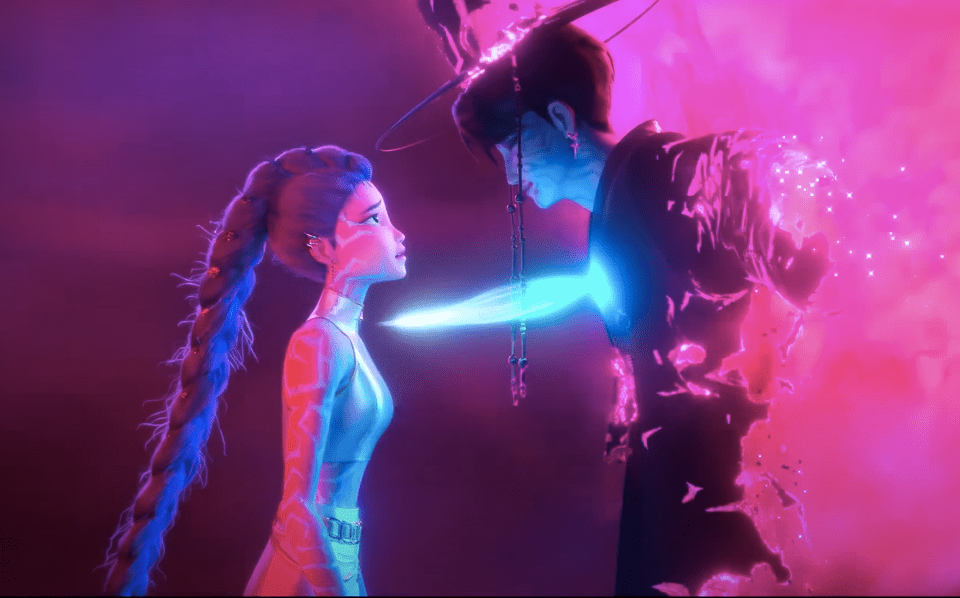
So, what does Princess Bari have to do with K-Pop Demon Hunters? Well, it resonates with my interpretation of Rumi, who ends up saving Jinu’s soul in the end and helping him cross over. As half demon–half demon hunter, she emotionally straddles the same gap that Princess Bari did physically between mortal and spiritual. Also, while Rumi’s parents didn’t abandon her on purpose (in a pitched storyline confirmed by Simon Baek, Celine killed Rumi’s parents) she was left all alone in the world but still did what was right.
Demon Hunting Weaponry
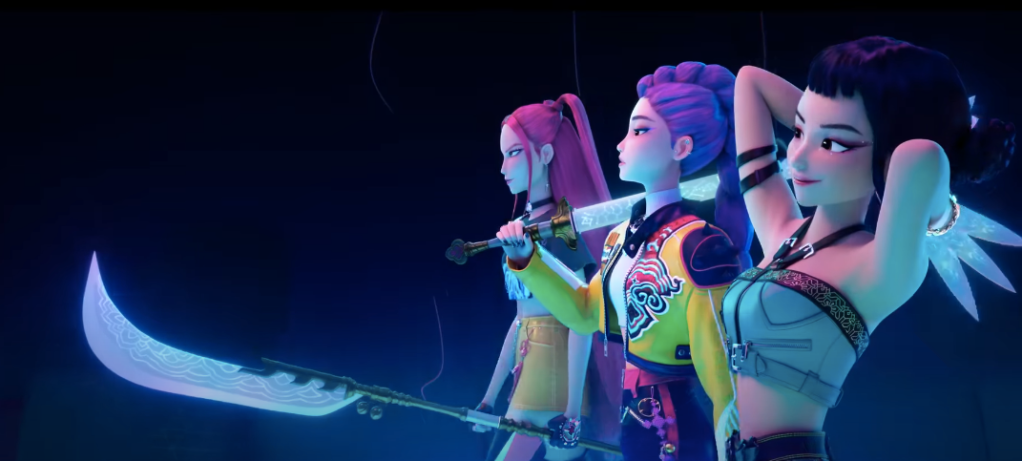
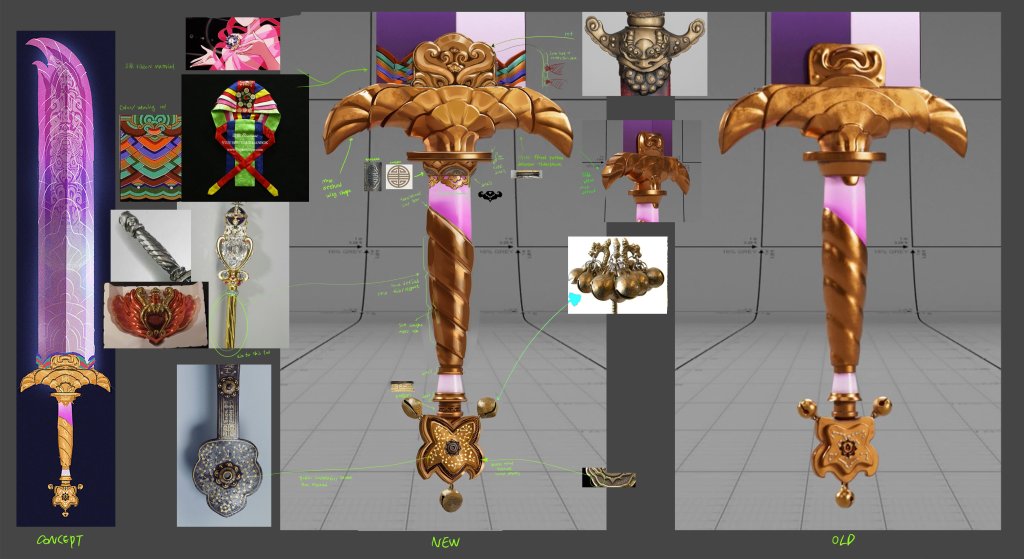
The weapons in the movie are inspired by Korean and Asian iconography, weaponry and design. Euni Cho (@joune5064), visual developer and part of the amazing art team for the movie, posted her concept designs for the girls weapons which can be seen below.
Rumi’s sword is a Sainchamsageom also known as the Great Four Tiger sword, and it is a ceremonial sword used for shamanistic rituals, including demon slaying. Kang says they chose a blunt weapon for Rumi since it would be the most chaotic choice for her.
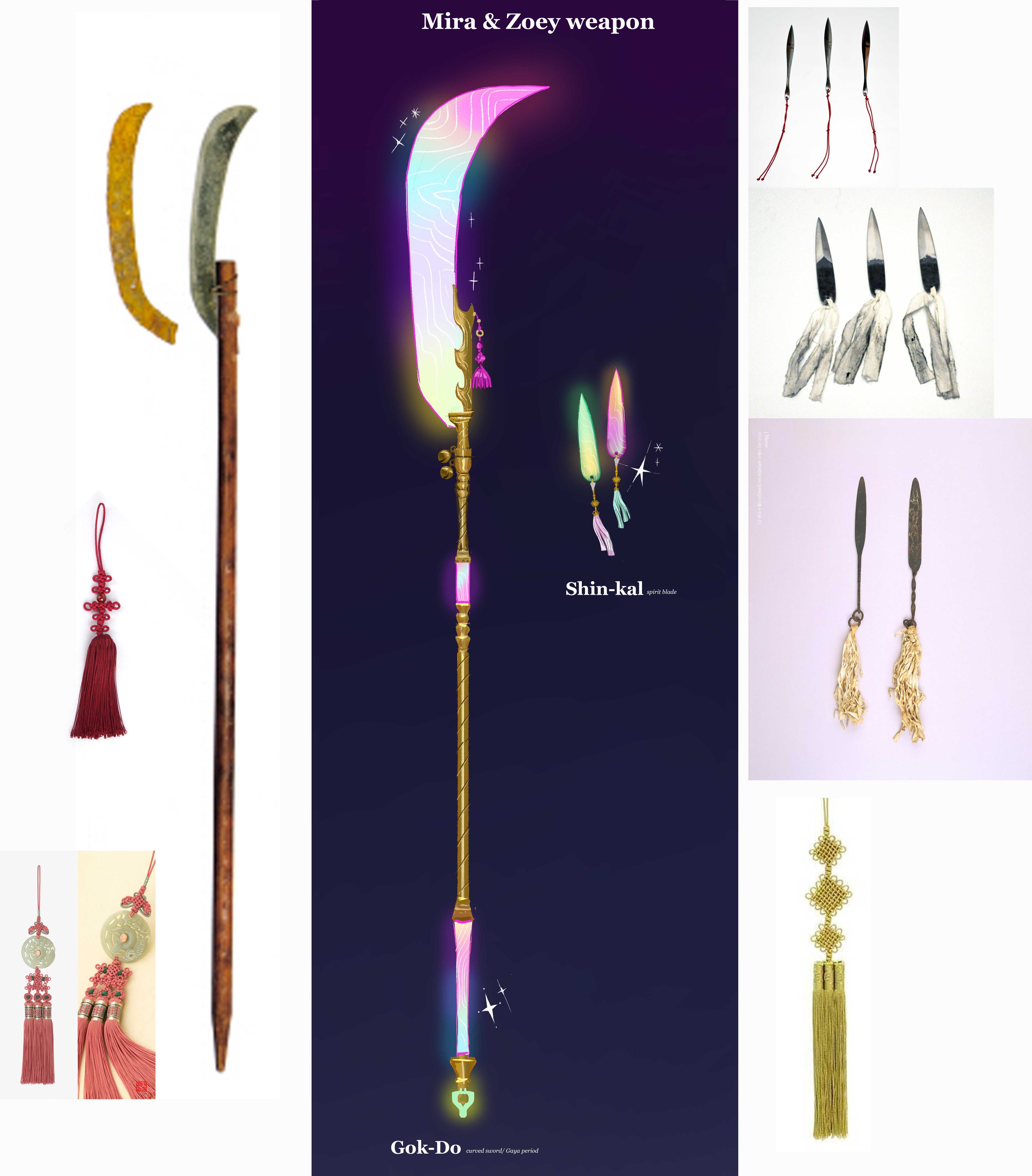
Meanwhile, Mira’s weapon, the Gok-Do, is inspired by ancient Korean Gaya curved swords and the team also took inspiration from the Woldo. Zoey’s Shin-kal are another call back to Shaman weapons, specifically the Mengdu which are a set of knives, a bell and divination implements native to Jeju and found in the Chogong bon-puri, a narrative in Jeju Shamanism. The full name of the weapons is “sin-kal seonsaeng Siwang daebeonji,” literally “godly knife the master, daebeonji of the Siwang” and they are used to divine the will of God as well as expel demons and in ritual dances.
That brings us to a close on the Shamanism and Folklore behind the girl group Huntr/x. If you want to read more about the demons they fight then be sure to read our next post: The Mythology and Monsters of K-Pop Demon Hunters.