
Festive Folklore Figures
Various, 10 minute read
Folklore Figures in January? Have we missed the memo or are we just recovering from the bliss of Folklore Festivities? No! It’s January 6th which marks Perchtatag and the end of the “Rauhnächten” (the time between the solstice and Epiphany).
So in the spirit of Frau Perchta, here is our list of some monstrous creatures of Yuletide! We have previously covered many different types of Christmas tales so look at the list below if you are searching for something specific:
- The Oak King and the Holly King
- Why the Sea is Salt: A Norse Holiday Tale
- The Mitten: A Ukrainian Winter Tale
If you are interested in Christmas ghosts and the Victorian obsession with them, check out our episode on Charles Dickens’ “The Christmas Carol.”
Are you looking for some good old Santa Claus and the history of modern-day St. Nick? Check out the poem: Twas’ A Night Before Christmas.
Krampus
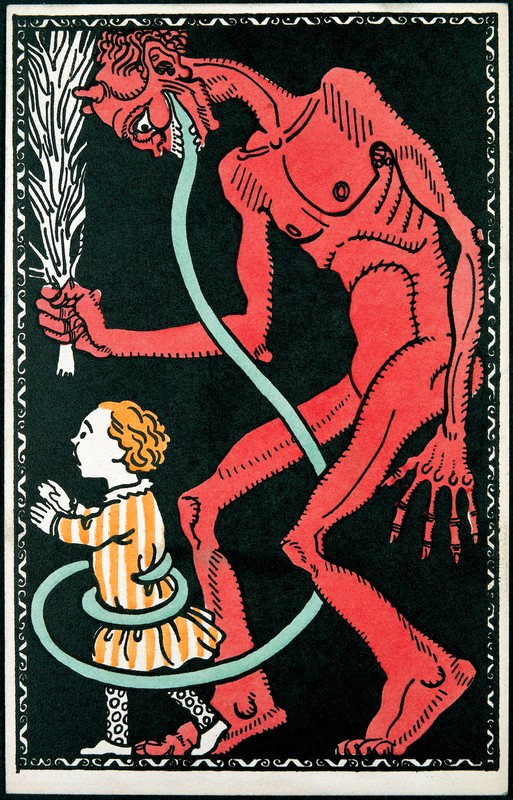
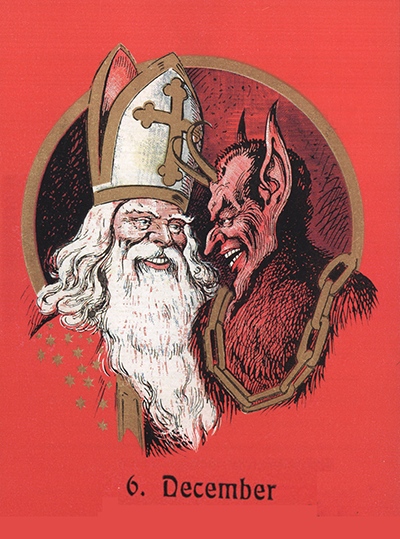
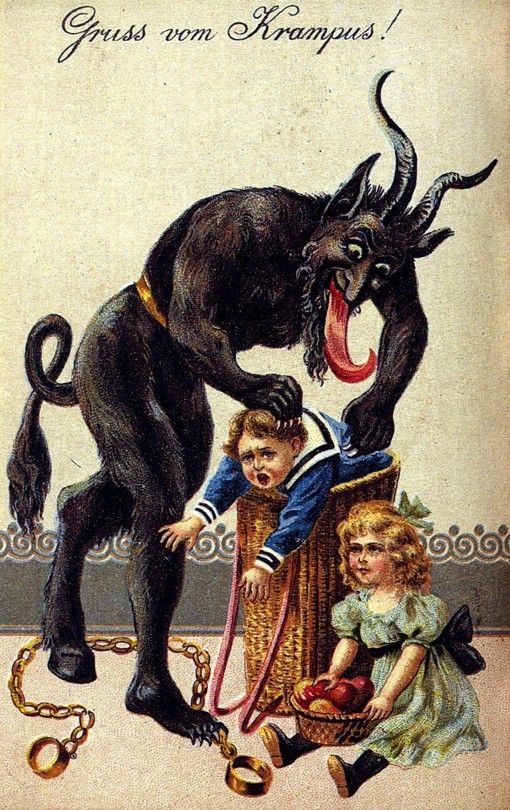
On the 5th/6th of December, the Christkindl appears to bring gifts and sweets to children all over Austria. However, along with the Christkindl, there comes Krampus. Originating from the winter solstice like most Germanic and pagan creatures, post-Christianization Krampus evolved into a demon-like creature with cloven hooves and goat horns. While we believe that Krampus existed as early as the 6th century, our first written record didn’t appear until the 16th century. Unlike Jolly St. Nicholas, Krampus is there to hand out coal and punishment to bad children! He carries a bundle of birch branches to whack bad children as well as a sack to carry the extra heinous ones away.
On Krampusnacht, adults dress up as Krampus and do the Krampuslauf, the Krampus run! Krampus festivities give bad-behaving children a scare and adults a chance to blow off steam! Some places do the Krampus and Perchten parades after the Winter Solstice up to January 6th when Perchta appears.
Gruss vom Krampus!
Frau Perchta
Now, Christmas in the Alpines isn’t all about Krampus, not while there is an even more horrifying household witch that will make you finish your winter cleaning quickly at the risk of disembowelment. Frau Perchta is a dual figure, both as a witch and a pagan goddess. Her origins could be Celtic or from the Norse Goddess, Frigg.
In some stories, she appears on the 12th night to ensure all the spinning in a household has been completed. If it hasn’t or any other slight has been committed against her (like failing to leave her a bowl of porridge) she will disembowel you, leave rocks and straw in place of your guts and drop you down a well! In other stories, she leads the wild hunt with her army of demonic Perchten and lost souls. However, she also rewards diligence and hard work with spools, golden spoons and coins.
Kallikantzaroi
While Krampus and Frau Perchta target the naughty, the Kallikantzaroi are more ambitious with their chaos. These Christmas goblins from Greek folklore spend the majority of the year underground. There, they focus on their life goal to saw down the world tree. The motif of the world tree is a common symbol used in various cultures and is seen as a connection between the heavens, the earth and the underworld. By trying to chop down the tree and separate it from its roots, the Kallikantzaroi hope for it to collapse on the Earth and wipe out all of humanity. Just your friendly goblins trying to bring about the apocalypse.
So if these little creatures are dead set on trying to bring about the end of the world, you may be wondering why they haven’t succeeded yet. Well, every year they get close to succeeding but there is always a slight snag in their plans. You see between Christmas Day on December 25th and the Feast of the Epiphany on January 6th, these creatures can come above ground since it’s between the time when Jesus was born but not yet baptized.
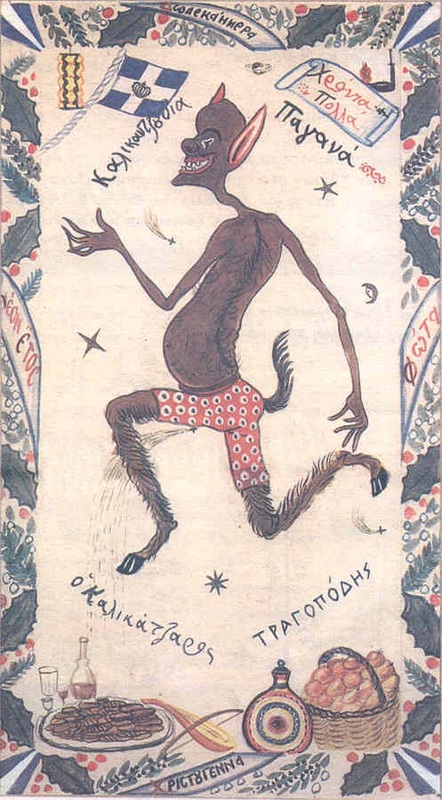
If you notice food going missing or items moving on their own during this time, it may be thanks to the Kallikantzaroi. After Epiphany, they return underground to continue their work, only to find that the tree has completely healed itself and so they must start all over again. One way to protect your home from them is to place a colander or a strainer on your doorstep. The Kallikantzaroi will be stuck in a loop of counting the holes but never getting past two. Eventually, they will get bored and leave.
Yule Lads and Gryla
If you’re a fan of mischievous Christmas creatures then the entire Yuletide family is just what you need. From December 11th to 24th, the Yule Lads (Jólasveinar in Icelandic) leave one by one to head into town, preceding their mother, the troll, Gryla, who is known for throwing naughty children in sacks and then boiling them in her mountain cave. They leave potatoes in the shoes of naughty children and each lad has their personality such as being a spoon licker, sausage swiper, meat hooker, pot scraper, door slammer, door sniffer, milk stealer, or window peeper.
If you want to see more of the Yule Lads and other Scandinavian creatures, check out Luke Pearson’s comic/ Netflix series, Hilda. It features a variety of wintertime wholesomeness, folklore and many of our Christmas creatures!
Yule Cat
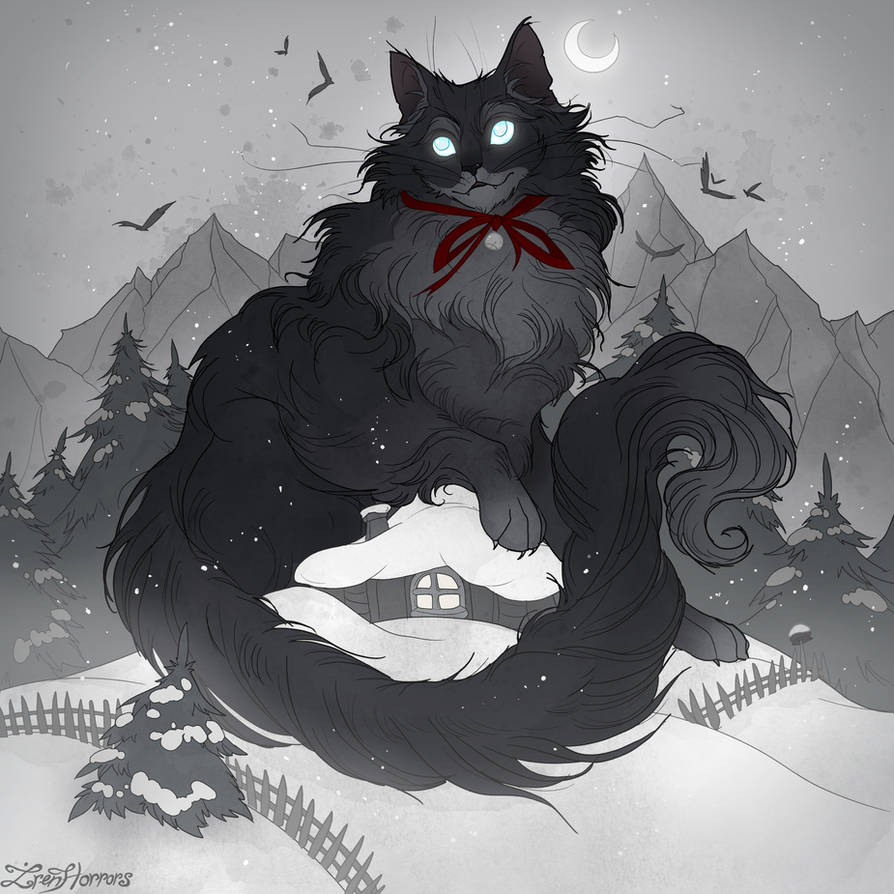
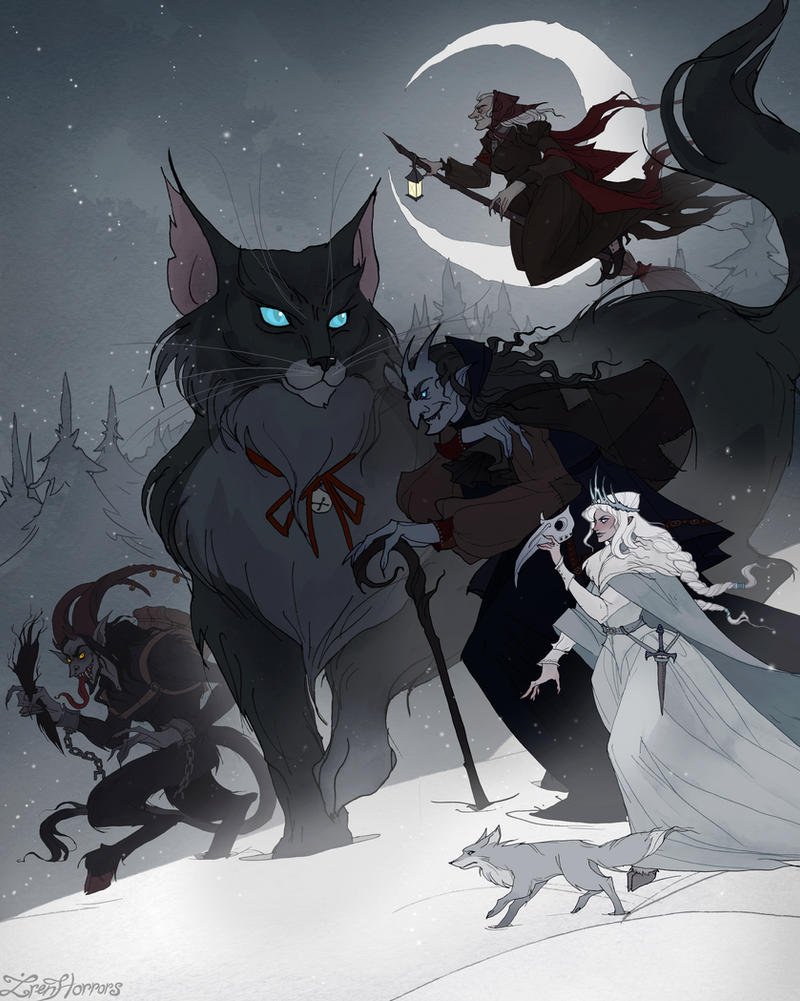
With Gryla and the Yule Lads close by, their enormous pet, the Yule Cat, will also be somewhere nearby. Also known as Jólakötturinn, the Yule Cat is taller than a normal house and is often depicted with glowing yellow or red eyes. On Christmas Eve, the Yule cat would wander from home to home to see if the children had received new clothes for Christmas. Sadly, if you had not gotten any new clothes then the Yule Cat would eat you up.
As stated in “The Yule Cat” poem by Johannes ur Kotlum:
If one heard a pitiful “meow”
Something evil would happen soon.
Everybody knew he hunted men
But didn’t care for mice.
The first written records on it come from the 19th century. However, it’s believed that the idea of the Yule cat came out of an earlier, practical need for the Icelandic people. During the Middle Ages, wool became a crucial export in Iceland. Once the harvest was complete in the fall, a household’s attention would turn to preparing wool to become yarn and clothes for winter. This would be everyone’s responsibility including the children. During this time, not many gifts would be exchanged, but if gifts were given then it would have been clothes- but only if everyone did their fair share of chores.
So, the implication of the Yule Cat eating those without new clothes means those children who did not contribute to the family wool production. This is definitely one cat you do not want to see this season. Below is art by IrenHorrors who does gorgeous prints of folklore and literary figures.
Nisse
Next up we have the widely popular Scandinavian Nisse or Tonttu. These creatures are small men with full beards and often dressed as traditional farmers with large conical hats. Traditionally, the Nisse were spirits of the home and would reward hard work by protecting the home and completing chores for their farmers. An angry or mistreated Nisse can bring about bad fortune and play tricks on the farmer, including killing their livestock.
As a way to please the house spirit, farmers would leave a bowl of porridge with butter on top for the Nisse on Christmas Eve. After the Christianization of Scandinavia, the creature was likened to a demon, and being accused of having an ‘ungodly’ Nisse was likened to being accused of being a witch.
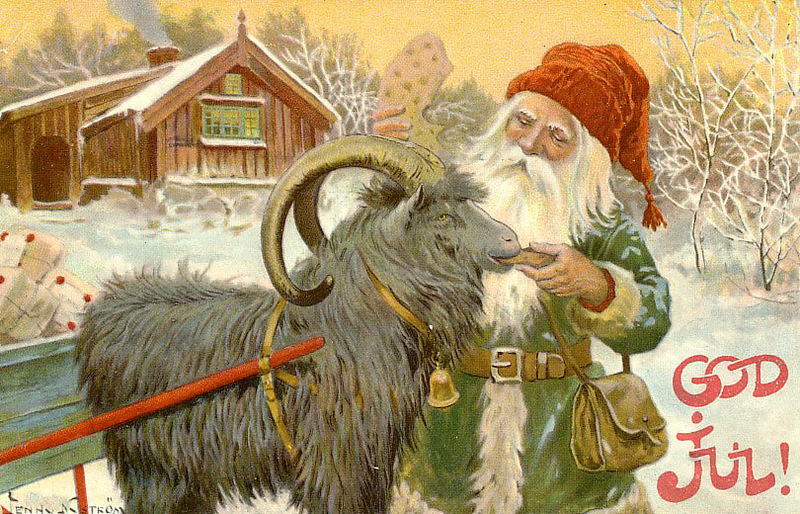
The Julenisse or Jul Nisse, is sometimes seen on the back of the Yule Goat as it delivers presents!
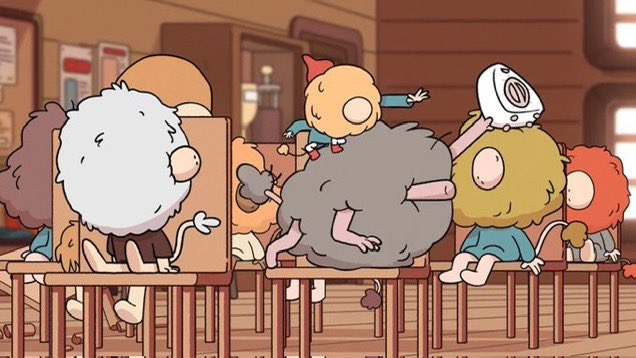
Nisse and Tontu are prevalent in Luke Pearson’s “Hilda” series (charming series and also full of other folklore figures)!
The Yule Goat
The Julbok or Juleebokken is the Yule Goat with origins in Norse legends and practices. The God of Thunder, Thor, had a chariot pulled by two goats named Tanngrisnir and Tanngnjóstr.
An early Norse practice in many farming communities was to save the last sheaf of the harvest and turn it into the figure of the male goat (note similar traditions of the corn maiden). The goat was thought to bring fertility and abundance in the new year. The tradition grew bigger and better with larger displays- however, there is also an arsonist tradition of burning the Yule Goat which started in the Swedish town of Gävle.
During the 19th century, the Julbok briefly became part of gift-giving traditions, but it was replaced first by the Julenisse and then by Santa Claus!
Barbegazi
If you spot a small, furry man with a long beard and giant feet out in the snow then chances are that you’ve come across the Barbegazi! These creatures live in the Swiss and French Alps, and travel using their massive feet as skis and snowshoes! Characterized by their small stature and long, furry beards, chances are you’ll hear their eerie hooting sound right before an avalanche.
These dwarves come out in the winter and will die quickly if taken out of their natural habitat! The most fascinating part of the Barbegazi isn’t their frozen beard, but how the fantastic little men and their tales travelled to Northwest Minnesota! As with people, folklore and creatures migrate to different parts of the world and the French settlers near the Roseau River brought their gnome with them!
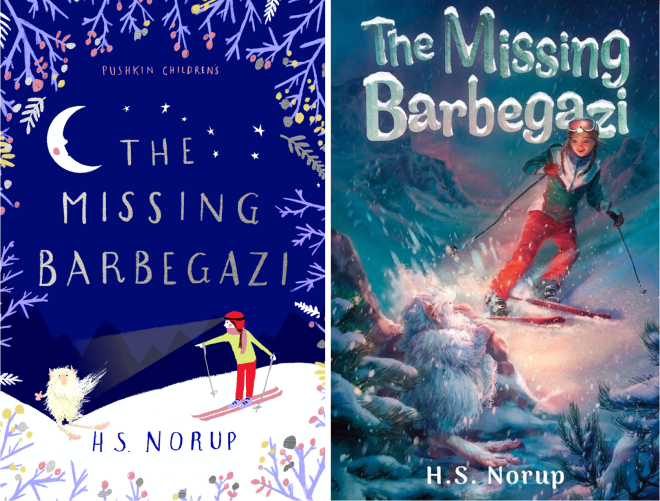
“The Missing Barbegazi” by H.S Norup with illustrations by Anna Morrison
Jack Frost
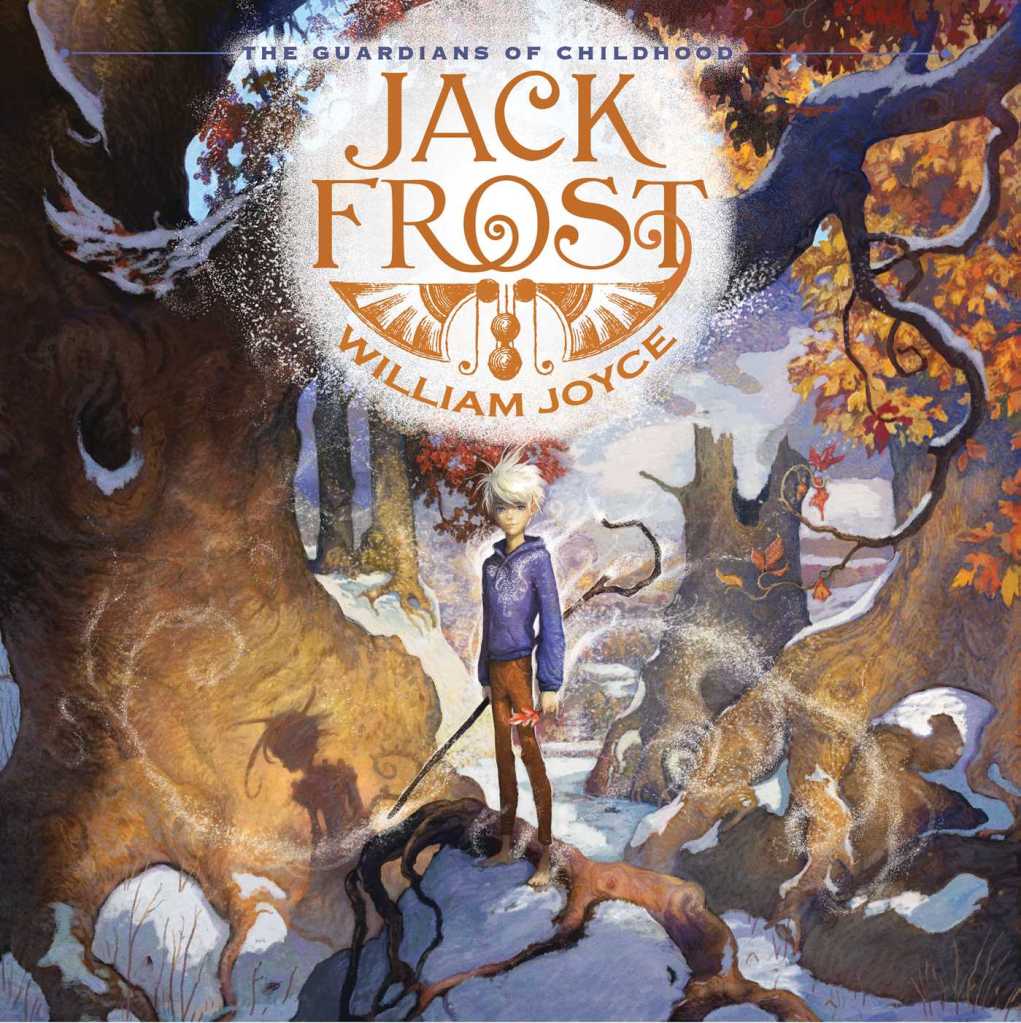
Like his namesake, Jack, from Jack and the Beanstalk, Jack Frost is an infamous English character that we all had a crush on in Rise of the Guardians.
The origins of Jack Frost come from other personifications of winter as a sprite, predominantly through Grandfather Frost, Old Man Winter, General Winter, and Frau Holle. He has no distinct appearance but has transitioned to becoming a sprite-like creature with pointed ears and covered in frost. His first written appearance is in Rune 30 of the Kalevala, the Finnish epic. In a scene that could easily be between Thor and Loki, the hero, Lemminkäinen, is stalled on the water by Jack Frost. While Jack taunts him, Lemminkäinen proceeds to insult Jack about his conception, which leads to Jack shrinking away.
Jack Frost can play a villain or a hero in different stories and is popular in modern media with many appearances throughout video games, movies, songs, and books.
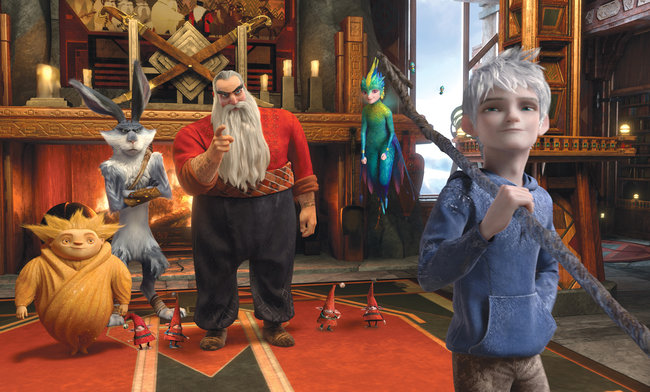
Paramount Picture’s “The Rise of the Guardians”



 Tales from the Enchanted Forest

